
Most of us believe acid’s role in the kitchen is to add a bright, zesty flavor. The truth is, we’re thinking about it backwards. The real power of acid, especially in Mediterranean cooking, is not in adding flavor but in preserving the ingredient’s natural integrity. By understanding when to use a touch of lemon—and when to leave it out entirely—you stop masking flavors and start protecting the vibrant, fresh taste that was already there, turning dull, gray vegetables into a thing of the past.
Have you ever bought beautiful, fresh produce from the market, only to watch it turn into a sad, discolored version of itself in your kitchen? You follow the recipe, you add the lemon juice as instructed, but your green beans turn a murky olive, and your delicate fish feels overpowered. The frustration is real, and it’s a common story for home cooks who love the idea of simple, ingredient-driven food, like the sunny dishes of Greece, but find the results lacking. Many will tell you to just “add more acid to brighten it up” or to buy a different kind of vinegar. But these are just guesses that don’t address the root of the problem.
What if the issue isn’t your skill, but your philosophy? The secret of a true Mediterranean kitchen isn’t about adding things to create flavor; it’s about a deep respect for the produce and using technique to protect the flavor that nature has already perfected. It’s about understanding the science of when to use acid as a shield against oxidation and when to let an ingredient shine on its own. This isn’t about complex recipes; it’s about timing, temperature, and technique. It’s about preserving the ingredient integrity from the moment you buy it to the moment you serve it.
This guide will walk you through that philosophy. We will explore how to keep herbs vibrant, why your chilled tomatoes lose their soul, and how the wrong acid can ruin a perfect dish. By the end, you will learn to use acid not as a flavor mask, but as a precise tool to unlock the true, vibrant taste of your food.
In this guide, we’ll journey through the simple yet profound principles of using acid correctly, ensuring every ingredient on your plate is as vibrant and flavorful as it was meant to be. Here is a look at the path we will take together.
Summary: A Guide to Preserving Natural Flavor with Acid
- Water Glass Method: How to Keep Parsley Fresh for 2 Weeks in the Fridge?
- Room Temp vs Fridge Cold: Why Tomatoes Taste Like Nothing When Chilled?
- The Caprese Mistake: Why Balsamic Vinegar Overpowers High-Quality Mozzarella?
- Why You Should Stop Buying Strawberries in December?
- Salt and Lemon Only: How to Trust the Flavor of Fresh Fish?
- When to Shop to Ensure Your Fresh Produce Lasts Until Friday?
- Farmed vs Wild: Which Choice Is Truly Better for the Environment Today?
- Cooking vs Finishing: Why You Are Wasting Money Heating Premium Olive Oil?
Water Glass Method: How to Keep Parsley Fresh for 2 Weeks in the Fridge?
The journey to vibrant food begins with our most delicate ingredients: fresh herbs. Nothing says “fresh” like a sprinkle of bright green parsley, but nothing is more disappointing than a wilted, yellowing bunch. The common advice is to store them in a glass of water, like a bouquet of flowers. This is a good start, but it misses a crucial, acidic detail that elevates it from a hopeful gesture to a reliable technique. The real enemy of your herbs is not just dehydration, but bacterial growth in the water.
By treating the herbs with respect and understanding what they need, we can dramatically extend their life. The goal is to create a stable, clean environment. Research from Oregon State University Extension confirms you can achieve up to 2 weeks of freshness retention with the proper water storage method. This isn’t magic; it’s simple science applied with care. You give the parsley a fresh cut on the stems, place it in an inch of clean water, and cover it loosely with a plastic bag to create a humid greenhouse effect.
But here is where the acid philosophy comes in. To truly protect your herbs, you need to control the water they live in. As the experts at the OSU Extension Service note, a small acidic adjustment makes all the difference:
A little lemon juice or a vitamin C tablet added to the water will keep it slightly acidic, deterring bacterial growth and increasing longevity.
– OSU Extension Service, Oregon State University Extension Service
This tiny addition of acid doesn’t flavor the herbs; it protects their environment. It’s a perfect example of using acid not as an ingredient, but as a guardian of freshness. By changing the water every few days and maintaining this slightly acidic shield, you are not just storing parsley; you are preserving its vibrant life force.
Room Temp vs Fridge Cold: Why Tomatoes Taste Like Nothing When Chilled?
Every lover of Mediterranean food knows the glory of a perfect, sun-ripened tomato. It’s sweet, complex, and bursting with a flavor that is the essence of summer. Yet, so many of us commit a cardinal sin against this perfect fruit: we put it in the refrigerator. We do it with good intentions, hoping to prolong its life, but in doing so, we permanently destroy its soul. The cold, sterile environment of the fridge is a death sentence for a tomato’s flavor.
This isn’t just an opinion; it’s a matter of chemistry. The rich, aromatic flavor of a tomato comes from a symphony of volatile compounds. These compounds are actively produced by enzymes within the fruit as it ripens. When you chill a tomato, you don’t just pause this process—you break the machinery. A case study on tomato storage shows that when tomatoes are stored below 54°F (12°C), they suffer permanent enzymatic damage. This halts the production of key flavor compounds, particularly those responsible for the fresh, “green” aroma we associate with a vine-ripened tomato. Even if you bring it back to room temperature, the flavor-making enzymes will never work again. You are left with a beautiful red shell, full of water but empty of taste.
To truly respect the tomato, you must store it on the counter, away from direct sunlight. Let it breathe and continue its gentle ripening process. The visual difference between a properly stored tomato and a cold-damaged one is stark, revealing the cellular collapse that robs it of its texture and juice.

As you can see, the cold damages the very structure that holds the flavor. A chilled tomato becomes mealy and watery because its cell walls have been compromised. This is a clear lesson in flavor preservation: sometimes, the most important action is inaction. Protecting flavor is about providing the right environment, and for a tomato, that environment is the warmth of your kitchen, not the cold of the fridge.
The Caprese Mistake: Why Balsamic Vinegar Overpowers High-Quality Mozzarella?
A classic Caprese salad is a testament to simplicity: ripe tomatoes, fresh basil, and creamy, delicate mozzarella di bufala. It should be a harmonious trinity where each ingredient shines. Yet, a common mistake turns this symphony into a shouting match: the liberal drowning of the dish in thick, sweet, and intensely acidic balsamic vinegar or glaze. While balsamic has its place, its aggressive flavor profile completely bulldozes the subtle, milky sweetness of high-quality mozzarella.
The problem lies in the sheer power of the acid. Acetic acid, the primary component in vinegar, is a potent compound. For context, some vinegars used for pickling can contain a potent acetic acid concentration that disrupts delicate flavors. While a fine aged balsamic is more complex, its core acidity and concentrated sweetness are simply too loud for the quiet conversation of a Caprese. It’s a classic case of flavor addition overpowering flavor preservation. Instead of enhancing the mozzarella, it masks it entirely. You end up tasting vinegar and tomato, with the cheese reduced to a mere textural element.
Respecting the mozzarella means choosing an acidic partner that complements rather than dominates. A high-quality extra virgin olive oil is the traditional and most respectful choice, its gentle fruitiness and peppery notes bringing out the richness of the milk. If you need a brighter acidic lift, a gentle squeeze of fresh lemon juice is far more appropriate. Here are some alternatives to let your mozzarella’s true flavor sing:
- Use a few drops of fresh lemon juice for a clean, bright acidity that doesn’t linger or stain.
- Let a high-quality extra virgin olive oil be the primary dressing, celebrating a classic terroir pairing.
- If you must use vinegar, choose a delicate white wine vinegar and use it with extreme moderation.
- Incorporate fragrant fresh herbs like basil or oregano to add complexity without overwhelming acidity.
- Finish with a sprinkle of flaky sea salt to amplify the natural flavors of the tomato and mozzarella.
The Caprese salad is a lesson in balance. True elegance in the kitchen is often about knowing what to leave out. By resisting the urge to add a powerful, dominant acid, you show the ultimate respect for the delicate star of the dish.
Why You Should Stop Buying Strawberries in December?
There’s a temptation in the modern grocery store to believe that all produce is available all the time. We see perfect-looking strawberries in the dead of winter and, dreaming of summer, we buy them. But when we get them home, the illusion shatters. They are often hollow, watery, and have a taste that is a pale, acidic ghost of a true strawberry. The issue is not a lack of acid, but a fundamental lack of everything else. You are buying a product that prioritizes shelf life over flavor.
The core of the problem is seasonality. A strawberry in June, picked at its peak from a local field, has spent weeks under the sun converting sunlight into complex sugars. Its flavor is a perfect balance of sweetness and natural acidity. A strawberry in December, likely grown thousands of miles away, has been engineered to survive long-distance travel. It was picked while still firm and unripe, and its development was focused on durability, not the creation of volatile flavor compounds. Off-season agriculture also often comes with a significant environmental footprint, requiring vast resources to mimic natural growing conditions.
As this comparative table illustrates, based on general findings from food science experts, the difference between a seasonal and an off-season strawberry is not subtle. It is a profound gap in quality that no kitchen trick can bridge. In this table, we’ve compiled metrics that show the dramatic difference in quality, a fact highlighted by analyses like those from culinary science resources like America’s Test Kitchen.
| Quality Factor | June Strawberries | December Strawberries |
|---|---|---|
| Sugar-to-Acid Ratio | 8:1 to 10:1 | 3:1 to 5:1 |
| Volatile Compounds | Full spectrum present | Limited aroma molecules |
| Texture | Firm with juice retention | Hollow, watery structure |
| Shelf Life | 3-5 days optimal | 7-14 days engineered |
This table makes it clear: the winter strawberry is fundamentally a different fruit. Its sugar-to-acid ratio is skewed heavily toward acid, which is why it tastes so tart and one-dimensional. No amount of lemon juice or sugar can replicate the complex aromatics and deep sweetness that are simply not there. The most respectful act a cook can perform is to embrace seasonality. Wait for the strawberry’s true moment in the sun. Your patience will be rewarded with an ingredient that needs no help to be perfect.
Salt and Lemon Only: How to Trust the Flavor of Fresh Fish?
In the coastal villages of the Mediterranean, the freshest fish is often served with nothing more than a good olive oil, a sprinkle of sea salt, and a wedge of lemon. To the modern cook, accustomed to complex marinades and heavy sauces, this can seem almost too simple. How can so few ingredients create such a profound flavor? The secret is trust. It is the trust that a perfectly fresh ingredient, treated with respect, contains all the flavor it will ever need. The salt and lemon are not there to create flavor, but to reveal and enhance the delicate taste of the sea.
Lemon juice plays a fascinating dual role here. When used sparingly on cooked fish, its acidity cuts through the natural oils, cleansing the palate and making each bite taste as bright and clean as the first. But when used on raw fish, as in a ceviche, the acid performs a kind of magic: it “cooks” the fish without any heat at all. This process is called denaturation. The citric acid alters the structure of the proteins in the fish, causing them to coagulate and become firm and opaque, just as they would if heated.
This acidic cooking is a delicate science. As explained in an analysis of acid’s effect on proteins, the process involves bringing the proteins to a specific state where they transform. According to a scientific breakdown of the process, when acid is added, the proteins hit an isoelectric point (around pH 4.6) and begin to precipitate, changing their texture from raw and translucent to firm and cooked. This is why the timing in ceviche is so crucial; too little time and the fish is raw, too much and the acid will “overcook” it, making it tough and chalky.
This minimalist approach forces you to focus on the most important factor: the quality of the fish. You cannot hide a less-than-fresh piece of fish behind a simple lemon and salt preparation. It demands that you seek out the best. But when you do, you are rewarded with a pure, unmasked expression of the ocean. It’s a powerful lesson in letting go of complicated recipes and learning to trust the inherent perfection of a great ingredient.
When to Shop to Ensure Your Fresh Produce Lasts Until Friday?
The philosophy of respecting ingredients begins before you even enter the kitchen. It starts at the market. All the knowledge about acid and temperature is useless if you begin with produce that is already past its prime. To ensure your ingredients are vibrant and full of life when you’re ready to cook later in the week, you must learn to think like a grocer and shop strategically. The key is to buy your produce as close as possible to when it arrives at the store.
While every store has a slightly different schedule, most major chains receive their largest fresh produce deliveries on specific days, often early in the week like Monday or Tuesday, with another key delivery before the weekend rush on Thursday or Friday. The best thing you can do is simply ask the produce manager at your local store. Ask them, “When do you get your main produce delivery?” They are usually happy to tell you. Shopping on these days, or the morning after, guarantees you are selecting from the freshest possible stock, giving you a huge advantage in shelf life.
Beyond the supermarket, the ultimate source of freshness is a local farmers market. Here, you are often buying produce that was picked that very morning or the day before. The difference in flavor and longevity is astounding. When you’re at a farmers market, go early. The best, most delicate items like leafy greens and berries are the first to go.
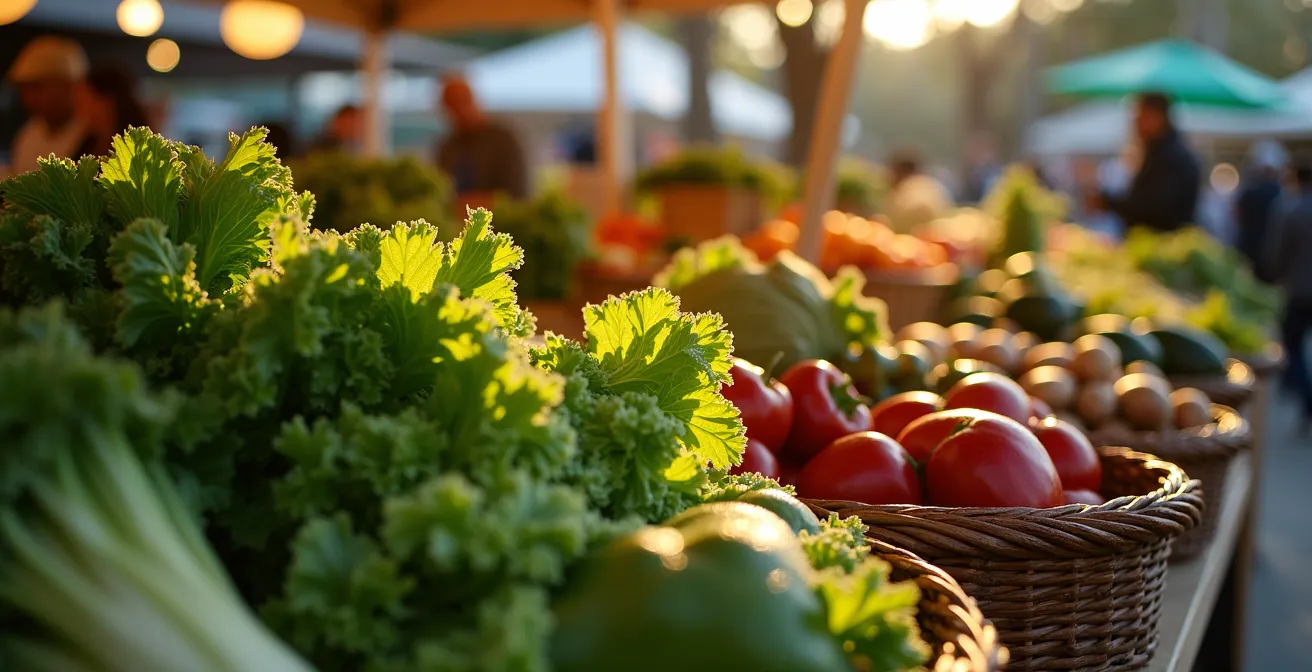
Look for signs of life and vitality: greens that are turgid and crisp, herbs that are fragrant, and fruits that are heavy for their size. This is not just shopping; it’s an act of curating. You are selecting the best possible building blocks for your meals. By aligning your shopping schedule with the natural rhythm of delivery and harvest, you are giving yourself and your ingredients the gift of time and freshness.
Farmed vs Wild: Which Choice Is Truly Better for the Environment Today?
Choosing the best ingredients goes beyond just freshness and seasonality; it extends to the very origin of our food. When it comes to seafood, the “farmed vs. wild” debate is one of the most complex and important conversations a thoughtful cook can have. For years, “wild-caught” was seen as the gold standard, while “farmed” was viewed with suspicion. However, the reality today is far more nuanced. Destructive fishing practices have depleted wild stocks, while innovations in aquaculture have created sustainable and even restorative farming methods.
The simple labels of “farmed” or “wild” are no longer enough to make an informed choice. A wild fish caught by a small boat using a pole and line has a tiny environmental impact. A wild fish caught by a massive vessel dragging a net across the ocean floor (bottom trawling) is an ecological disaster, destroying habitats and resulting in huge amounts of bycatch. Similarly, a farmed fish raised in a crowded open-net pen in the ocean can spread disease and pollution. But a fish raised in a land-based, closed-loop Recirculating Aquaculture System (RAS) can be a highly sustainable choice.
To be a truly responsible cook, you must look past the labels and ask deeper questions. It’s about understanding the method, not just the category. Some of the most sustainable choices are “farmed” shellfish like oysters and mussels. These are restorative species; they actually clean the water and create habitat as they grow, making them a net positive for the marine environment. Choosing these is an act of cooking that actively helps heal our oceans.
Making the right choice means being an educated consumer. Look for certifications from organizations like the Aquaculture Stewardship Council (ASC) or the Marine Stewardship Council (MSC), and don’t be afraid to ask your fishmonger specific questions about how and where the fish was caught or raised. The best choice is not always the most obvious one, but it’s a choice that reflects the deepest respect for our planet’s resources.
Key Takeaways
- True flavor comes from preserving an ingredient’s natural integrity, not from adding masks.
- Temperature and timing are as crucial as any ingredient; cold can permanently destroy flavor in produce like tomatoes.
- Seasonality is non-negotiable. The best technique cannot save an ingredient that is fundamentally out of its prime.
Cooking vs Finishing: Why You Are Wasting Money Heating Premium Olive Oil?
We’ve journeyed from herbs to seafood, from seasonality to shopping. The final piece of the puzzle lies in the finishing touch, and no ingredient is more central to the Mediterranean kitchen than olive oil. But here too, a critical misunderstanding leads to wasted money and lost flavor. Many home cooks use their expensive, high-quality Extra Virgin Olive Oil (EVOO) for all their cooking needs, from high-heat searing to gentle sautéing. This is a mistake that not only damages your wallet but also destroys the very qualities that make premium olive oil special.
Extra Virgin Olive Oil is, in essence, a fresh fruit juice. Its beautiful color, complex aromas, and peppery, healthful bite come from delicate compounds called polyphenols. These compounds are extremely sensitive to heat. When you pour your beautiful, green, grassy EVOO into a hot pan, its smoke point is relatively low, and those precious polyphenols begin to break down and burn away almost immediately. You are literally burning money and turning a nuanced, flavorful finishing oil into a generic, flat-tasting cooking fat.
The respectful, intelligent approach is to think of oils in tiers, each with a specific purpose. High-heat cooking requires a neutral oil with a high smoke point. General, low-heat cooking can be done with a basic, less expensive olive oil. The precious, premium EVOO should be reserved exclusively for finishing. Drizzle it over a dish *after* it has been removed from the heat. Add it to salads, dip bread in it, or pour it over grilled fish just before serving. This is how you preserve its complex flavor and its health benefits, allowing it to shine as the star it is meant to be.
Your Action Plan: The Three-Tier Oil Strategy
- High-Heat Searing (above 400°F/204°C): Stock a neutral, high-smoke-point oil like grapeseed, canola, or avocado oil for searing meats and getting a hard crust.
- General Cooking (under 350°F/177°C): Keep a bottle of basic, everyday olive oil (not extra virgin) for gentle sautéing of aromatics like onions and garlic.
- Finishing and Raw Applications: Reserve your best premium Extra Virgin Olive Oil exclusively for drizzling over finished dishes, making dressings, or for dipping.
- Preserve Polyphenols: Always add your premium EVOO to hot dishes only after they have been removed from the heat source to protect its delicate flavor.
- Maximize Flavor: Drizzle the premium oil just before the dish is served to ensure its aromatic compounds reach the nose and palate in their most potent form.
By adopting this simple strategy, you cook more efficiently, save money, and, most importantly, you pay the ultimate respect to one of the world’s most ancient and revered ingredients. It is the final step in the philosophy of flavor preservation.
Frequently Asked Questions on Sustainable Seafood Choices
How can I identify sustainably farmed fish?
Look for closed-system Recirculating Aquaculture Systems (RAS) certification, which minimizes water pollution and disease transfer, unlike open-net pen farming that can have a greater environmental impact.
What are restorative aquaculture species?
Oysters, mussels, and farmed seaweed are excellent examples. These species actually clean water and create new habitats while they grow, making them a net-positive choice for marine ecosystems.
Which fishing methods cause the most environmental damage?
Bottom trawling is widely considered one of the most destructive methods because it destroys seafloor habitats and has high rates of bycatch (catching non-target species). In contrast, methods like pole-and-line fishing are highly selective with minimal ecosystem impact.