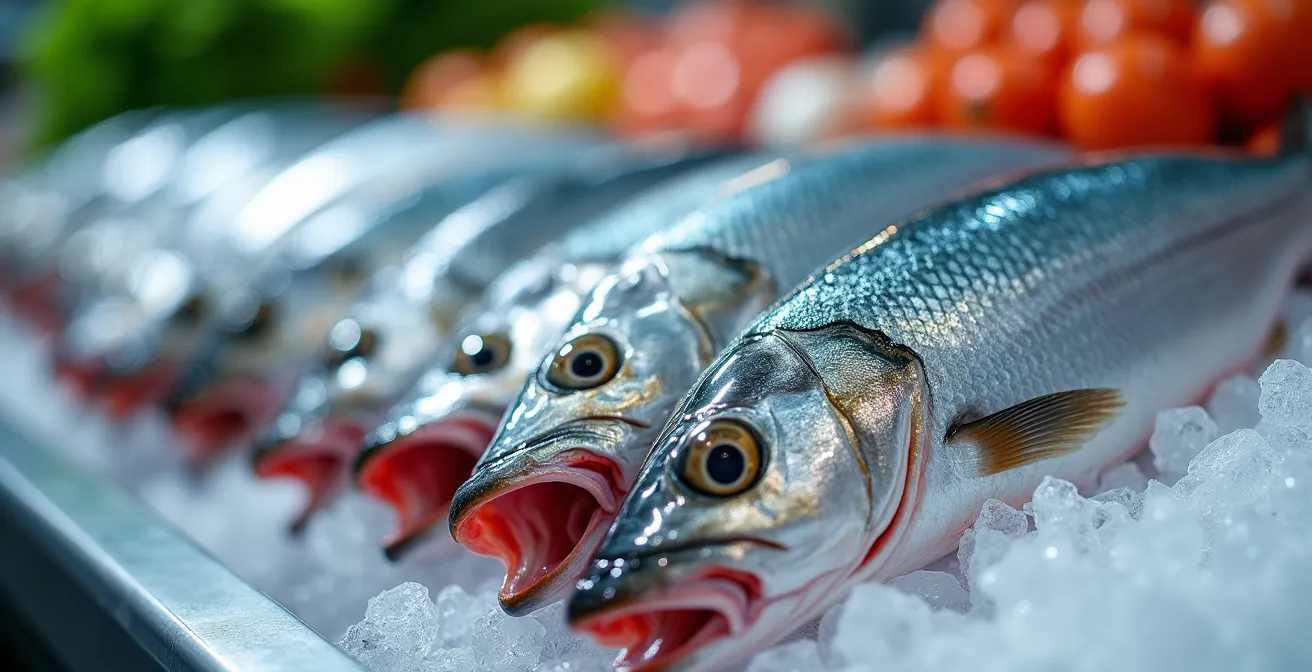
The freshest fish at the counter is often the one that was frozen solid at sea hours after being caught.
- Your nose is your best tool, but you need to know the right scents to look for: clean ocean or cucumber, never ammonia.
- “Sushi-grade” is a marketing term; safety for raw consumption comes from specific freezing protocols, not a label.
Recommendation: Shift your focus from “fresh” to “well-handled.” Ask when a fish was filleted, not when it arrived, and embrace the quality of flash-frozen seafood.
Standing in front of a supermarket fish counter can feel like a high-stakes exam. The bright lights, the bed of ice, the rows of fillets, and the silent judgment of the person behind the counter. You’re haunted by the fear of spending good money on “bad” fish—the kind that will stink up your kitchen and disappoint at dinner. You’ve heard the common advice: look for clear eyes, press the flesh, and make sure it doesn’t smell “fishy.” But this is surface-level knowledge, and it often fails you.
The real secret isn’t about following a simple checklist. It’s about learning to think like a fishmonger. It’s about understanding the entire journey of that fish, from the moment it leaves the water to the moment it lands on the ice. This is about supply chain freshness, not just superficial appearances. The truth is, the most pristine, flavorful, and safe fish you can buy might not be the one labeled “fresh” at all. It’s time to unlearn the myths and master the counter-intuitive truths that guarantee you bring home a perfect piece of seafood every single time.
This guide will walk you through the real insider tests, bust the most common myths, and give you the confidence to navigate any seafood counter. You’ll learn to evaluate fish not as a nervous customer, but as a seasoned professional.
Summary: A Fishmonger’s Guide to Decoding the Seafood Counter
- Sea vs Ammonia: What Should Fresh Fish Actually Smell Like?
- Flash Frozen at Sea: Why It Is Often Better Than “Fresh” Counter Fish?
- Eyes and Bones: How to Overcome the Fear of Cooking a Whole Fish?
- Sushi Grade Myth: What Actually Makes Fish Safe to Eat Raw?
- Farmed vs Wild: Which Choice is Truly Better for the Environment Today?
- Chicken Breast vs Thighs: Which Cooks Faster Without Drying Out?
- The Smell Test: How to Know if Your Olive Oil Has Gone Bad?
- Lemon Juice Science: When to Add Acid to Avoid Gray Vegetables?
Sea vs Ammonia: What Should Fresh Fish Actually Smell Like?
Forget everything you’ve been told about fish not smelling “fishy.” That’s too vague. The single most important tool you have is your nose, but you need to know the specific aromatic profile you’re looking for. Truly fresh fish smells of its environment. It should have a clean, mild aroma reminiscent of the ocean breeze, clean seawater, or even mineral water. Some fish, particularly white fish, can have a smell like fresh-cut cucumber or melon. This is a sign of peak freshness.
The “fishy” smell people fear is actually a chemical warning sign. As fish ages, bacteria break down a compound called trimethylamine oxide (TMAO) into trimethylamine (TMA). This is what creates that sharp, ammonia-like or swampy odor. If you detect even a hint of ammonia, it’s an immediate deal-breaker. That fish is past its prime. In fact, according to sensory scientists at Nofima, a fish can develop a cucumber, metal, or hay-like smell as it ages slightly, even before the outright “bad” smell appears. Trust your instincts: if it smells off in any way, walk away.
Here is a simple guide to a fish’s aromatic profile:
- The Goal: The fish should smell like clean mineral water, cucumber, or a fresh sea breeze.
- Ocean Fish: Look for a clean, briny, or seaweed-like aroma. It should transport you to the coast.
- Freshwater Fish: A slightly earthy or muddy scent is normal and comes from the lake or river bottom. It should not be overpowering or sour.
- The Red Flag: Any hint of ammonia, bleach, sourness, or a swampy odor means the fish has started to decay.
- Pro Tip: If the fish is wrapped in plastic, the smell can be concentrated. Open it or ask the fishmonger to unwrap it and let it air out for a minute before making your final judgment. Also, ask to smell the gills—they are one of the first parts to turn and are a great indicator of freshness.
Flash Frozen at Sea: Why It Is Often Better Than “Fresh” Counter Fish?
Here is the single biggest secret of the seafood counter: the term “fresh” is misleading. A “fresh, never frozen” fillet might have spent a week or more in transit on ice, slowly losing its texture and flavor every single day. In contrast, a huge portion of the wild-caught fish you see was actually frozen at sea—a process called “flash freezing”—and is often the superior product. The truth is, most wild-caught fish freeze at sea within hours of harvest, preserving the moment of peak freshness.
This is what is known as the Freezing Paradox. Freezing technology on modern fishing vessels is so advanced that it can freeze a fish solid in a matter of hours. This process creates very small ice crystals, minimizing damage to the cell walls of the fish. The result? When properly thawed, the fish retains its firm texture, moisture, and clean flavor, as if it just came out of the water. That “fresh” fillet, on the other hand, has been undergoing cellular degradation for days.

Look for terms like “frozen at sea” or “flash frozen.” Don’t be afraid to buy high-quality frozen fish, especially for species like shrimp, scallops, and squid, which degrade very quickly when “fresh.” The key is proper thawing: let it thaw overnight in the refrigerator, not on the counter or in hot water. This ensures the quality locked in by the flash-freezing process is delivered to your plate.
This table breaks down the key differences, showing why the journey matters more than the label.
| Aspect | Flash Frozen at Sea | ‘Fresh’ Counter Fish |
|---|---|---|
| Time to Freeze | Hours after catch | Never frozen or thawed after days |
| Quality Preservation | Locks in flavor, texture, nutrients | Degrades during 7-10 day transport |
| Cell Damage | Minimal with proper thawing | Progressive deterioration |
| Best For | Shrimp, scallops, squid | Local, same-day catch only |
Eyes and Bones: How to Overcome the Fear of Cooking a Whole Fish?
The sight of a whole fish—eyes, head, and all—can be intimidating. But from a fishmonger’s perspective, buying a fish whole is one of the smartest moves you can make. The skin and bones act as a natural barrier, protecting the delicate flesh from exposure to air. This maintains its moisture and structural integrity far better than a pre-cut fillet. It’s a simple rule: the less a fish has been handled and cut, the fresher it will be.
An Insider’s Tip on Freshness
This is why experienced fishmongers prioritize fish that is filleted in-store. As Wegmans fishmonger Mark Fromm explains, whole fish maintains its freshness far better because “The less time that the flesh has had exposure to oxygen, the fresher it will be.” His advice is to change your question at the counter. Instead of asking, “When did this arrive?” you should ask, “When was this filleted?” A fish that arrived whole three days ago and was filleted this morning is infinitely fresher than a pre-cut fillet that arrived yesterday.
Don’t let the prep work scare you. You don’t have to do it yourself. This is where you build a relationship with your fishmonger. Walk up to the counter with confidence and make a simple, direct request. This is the exact script to use:
Could you please scale and gut it for me, but leave the head and tail on?
– Billy’s Stone Crab Market, Fish Market Shopping Guide
Any good fishmonger will happily do this for you at no extra charge. Cooking a whole fish is also surprisingly simple—roasting or grilling it requires minimal fuss and results in incredibly moist, flavorful meat. The bones and head add immense flavor during cooking. Once you try it, you’ll have a hard time going back to fillets.
Sushi Grade Myth: What Actually Makes Fish Safe to Eat Raw?
The term “sushi-grade” or “sashimi-grade” is perhaps the most misunderstood label in the seafood world. Here’s the blunt truth: it’s not an official, regulated term. There is no government body or inspection agency that certifies a fish as “sushi-grade.” It is purely a marketing term used by sellers to imply a high level of quality and freshness suitable for raw consumption.
So, what actually makes fish safe to eat raw? The primary concern with raw fish is parasites. The only way to ensure these are destroyed is through freezing. The U.S. Food and Drug Administration (FDA) has specific guidelines for this. The key is regulated safety through a controlled cold chain. According to official guidance, the risk is neutralized by freezing at -4°F/-20°C for 7 days, which destroys parasites. Most “sushi-grade” fish sold in the US has been previously frozen to meet these standards, reinforcing the “Freezing Paradox” we discussed earlier.
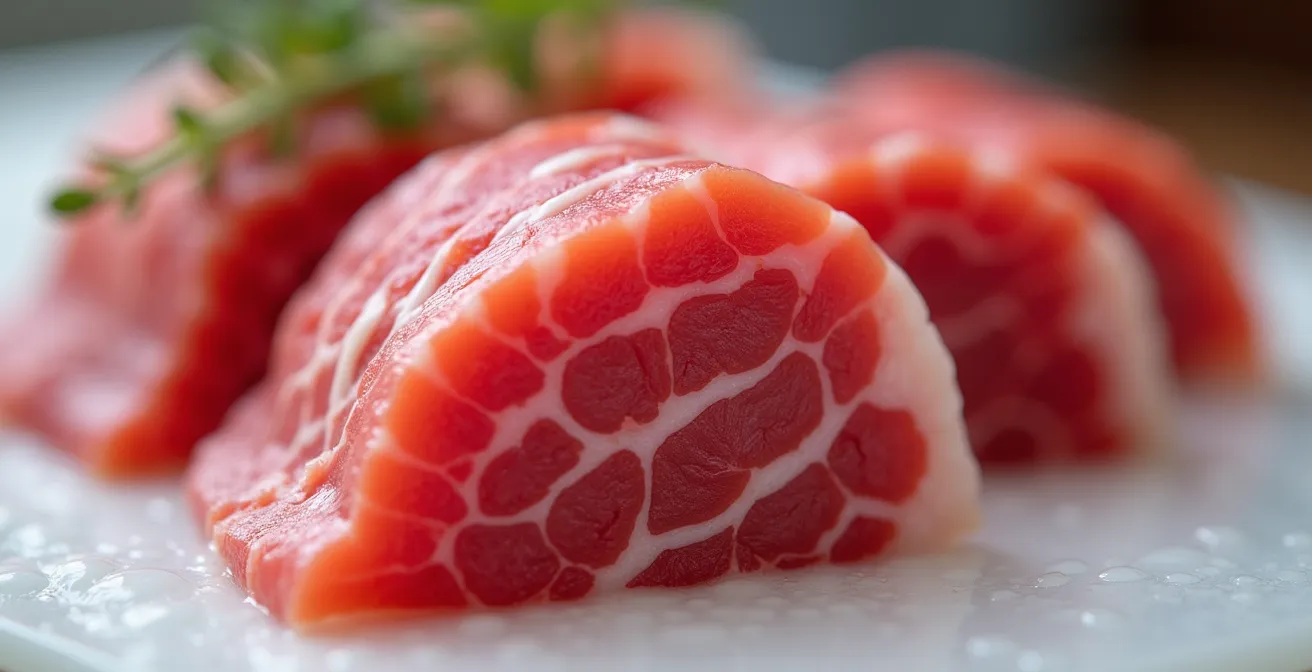
Therefore, when you want to prepare fish raw at home, you should be less concerned with a meaningless label and more concerned with the fish’s history. Buy from a reputable fishmonger who can tell you if the fish is suitable for raw consumption and can verify that it was frozen correctly. Species like tuna, which have a lower parasite risk, are often sold fresh for raw use, but for others like salmon, proper freezing is non-negotiable.
Your Action Plan: Home Raw Fish Safety Protocol
- Source Smart: Only buy from reputable vendors who can confidently confirm their freezing process and verify the fish is intended for raw use.
- Keep it Cold: Store the fish in the coldest part of your refrigerator, preferably on a bed of ice in a sealed container, until you are ready to prepare it.
- Prevent Cross-Contamination: Use separate cutting boards, knives, and utensils that are dedicated solely to raw fish preparation to avoid any bacterial spread.
- Use it Fast: For optimal safety and flavor, consume the fish within one to two days of purchase. Raw fish is not something to let linger in the fridge.
- Final Sensory Check: Right before you prepare it, perform one last check. The fish must have an ocean-fresh smell, firm flesh, and a vibrant, clean appearance.
Farmed vs Wild: Which Choice is Truly Better for the Environment Today?
The “farmed versus wild” debate is loaded with outdated information. For years, the simple advice was “wild is good, farmed is bad.” Today, the reality is far more complex. Some wild fisheries are disastrously overfished and use destructive harvesting methods. Conversely, some modern aquaculture (fish farming) operations are incredibly sustainable, resource-efficient, and produce a high-quality product. Judging a fish simply by whether it was farmed or wild is no longer enough.
The key is to move from a binary choice to an informed one. The best tool for this is the Monterey Bay Aquarium’s Seafood Watch program. This initiative, which has been producing guides twice annually since 1999, making it one of the longest-running sustainable seafood programs, uses rigorous science to evaluate both wild fisheries and aquaculture operations. They provide simple, color-coded recommendations: “Best Choice” (green), “Good Alternative” (yellow), and “Avoid” (red).
This isn’t about memorizing lists of fish. It’s about using a reliable, real-time tool to make a responsible decision right at the counter. The complexity of global supply chains means that the sustainability of a specific type of fish can change based on where and how it was caught or raised.
Your Sustainability Tool: The Seafood Watch App
The most practical way to apply this knowledge is by using the Monterey Bay Aquarium’s free Seafood Watch app. It uses your phone’s GPS to provide location-specific recommendations for sustainable seafood choices in both grocery stores and restaurants. The app’s recommendations are not based on opinion but on solid scientific data from government reports, peer-reviewed journal articles, and consultations with fishery experts. Users can even help expand the database by adding restaurants that serve sustainable options, which are then vetted by the Aquarium. It turns a confusing choice into a simple, confident action.
Now that your seafood knowledge is sharp, a good fishmonger knows that kitchen wisdom doesn’t stop at the water’s edge. Many of the principles of freshness, proper handling, and busting myths apply across the entire kitchen. Let’s tackle a few other common questions that come up at the counter.
Chicken Breast vs Thighs: Which Cooks Faster Without Drying Out?
This is a classic kitchen dilemma. Chicken breasts cook faster, but chicken thighs are far less likely to dry out. The reason lies in their composition. Chicken breasts are very lean, composed of long muscle fibers with very little fat or connective tissue. This allows heat to penetrate quickly, but it also means that once the moisture is gone, it’s gone for good. Overcooking a breast by even a minute can turn it from juicy to chalky.
Chicken thighs, on the other hand, are a marvel of culinary forgiveness. They have a higher fat content and are rich in collagen-rich connective tissue. As the thigh cooks, the fat renders and the collagen melts into gelatin, continuously basting the meat from the inside. This process keeps the meat incredibly moist and tender, even if you cook it a bit longer than intended. While they take a few extra minutes to cook through compared to breasts, their built-in insurance against dryness makes them a much safer bet for weeknight dinners, grilling, or slow-cooking.
For a quick, precise meal where you can pay close attention, a chicken breast is fine. For almost any other application where you want guaranteed juicy results, the thigh is the superior choice. It’s more flavorful, more forgiving, and often cheaper—a trifecta of benefits.
Key Takeaways
- Trust your nose over your eyes: Look for a clean, oceanic or cucumber scent, and reject any hint of ammonia.
- “Flash frozen at sea” is often a sign of higher quality than “fresh” fish that has traveled for days.
- A whole fish stays fresher longer. Don’t be afraid to ask your fishmonger to scale and gut it for you.
The Smell Test: How to Know if Your Olive Oil Has Gone Bad?
Just like with fish, your nose is the best tool for judging the freshness of your olive oil. Olive oil is essentially a fruit juice, and like any juice, it has a limited shelf life. When it goes bad, it’s called rancidity. A rancid oil won’t make you sick, but it will ruin the flavor of your food with an unpleasant taste and smell. Many people are so used to the taste of low-quality or rancid oil that they don’t even realize what fresh olive oil should taste like.
To perform the smell test, pour a small amount of oil into a glass. Cup the glass in your hand to warm it slightly, which helps release the aromas, and swirl it gently. Now, stick your nose in and take a deep sniff. Fresh, high-quality olive oil should smell vibrant and alive—think grassy, peppery, fruity, or like fresh green tomatoes or artichokes. It should smell clean and pleasant.
The signs of rancidity are unmistakable once you know what to look for. If the oil smells like old walnuts, putty, crayons, or stale peanuts, it has gone bad. It will have a greasy, waxy, and completely flat aroma with none of the fresh, “green” notes. If you’re brave enough to taste it, rancid oil will have a greasy mouthfeel and a stale, bitter flavor, leaving an unpleasant aftertaste. If your oil fails the smell test, it’s time to throw it out. Using it will only detract from your cooking.
Lemon Juice Science: When to Add Acid to Avoid Gray Vegetables?
The timing of when you add acid, like lemon juice or vinegar, can make a huge difference in the final color and texture of your vegetables, especially green ones. The vibrant green in vegetables like green beans, broccoli, and asparagus comes from chlorophyll. Unfortunately, chlorophyll is very sensitive to acid and heat. When exposed to both, it quickly breaks down into a different compound, pheophytin, which has a drab, olive-green or grayish color. This is why overcooked green beans turn that unappetizing shade.
The scientific rule is this: add acid at the very end of cooking, or in your dressing after the vegetables are cooked and cooled. If you add lemon juice to the water while blanching your green beans, or marinate your asparagus in a vinaigrette before roasting, you are guaranteeing they will turn a dull gray-green. The acid breaks down the chlorophyll molecules before they’ve even had a chance to shine.
To keep your green vegetables bright and vibrant, cook them quickly in salted water (blanching) and then immediately shock them in an ice bath. This locks in the chlorophyll. Once they are cooked and cooled, you can toss them with all the lemon juice or vinaigrette you want. The color will hold. This principle of delaying the acid is crucial for presentation and makes your final dish look as fresh and appealing as it tastes.
Now, armed with this insider knowledge, you can walk up to any counter with the confidence of a professional. You can see past the marketing labels and evaluate what’s truly in front of you. Start putting this knowledge into practice on your next shopping trip to transform the quality of the food you bring home.