
Contrary to popular belief, steaming is not universally the ‘best’ way to cook kale; the optimal method is a strategic choice dependent on your specific nutritional goal.
- Boiling is superior for reducing anti-nutrients like oxalates, thereby increasing the bioavailability of minerals like calcium.
- Steaming excels at preserving heat-sensitive, cancer-fighting compounds (glucosinolates) and water-soluble vitamins like Vitamin C.
Recommendation: For maximizing mineral absorption, a quick boil is effective. For preserving delicate phytonutrients and vitamins, a short steam is the optimal strategy.
As a wellness enthusiast, you’ve made the intelligent choice to incorporate kale into your diet. You’re paying a premium for this nutrient-dense powerhouse, but are you truly unlocking its full potential? The common advice is to lightly steam greens to preserve their delicate vitamins, a recommendation that paints boiling as a nutrient-destroying villain. This simplistic view, however, overlooks a critical layer of nutritional biochemistry that is paramount for anyone serious about optimization. The truth is far more nuanced and presents a series of fascinating biochemical trade-offs.
The question isn’t simply “steaming vs. boiling.” The real question is, which nutrients are you aiming to maximize? The answer dictates a surprisingly different approach. Factors like anti-nutrients, the stability of specific vitamins, and even the physical preparation of the leaves before they touch the heat can dramatically alter the nutritional return on your investment. Thinking beyond the stove, the journey to peak nutrient value begins with how you select and store your produce and extends to what you pair it with on your plate.
This guide abandons the one-size-fits-all advice and dives into the science. We will dissect the impact of different cooking methods on specific compounds within kale, from calcium-blocking oxalates to cancer-fighting glucosinolates. By understanding these mechanisms, you can move from following generic rules to making strategic, data-driven decisions that turn your kitchen into a personal nutrition lab. We will analyze the data on nutrient loss, explore preparation techniques that protect valuable compounds, and even consider when raw or fermented might be the superior choice. Get ready to rethink everything you thought you knew about cooking greens.
To navigate this deep dive into nutritional optimization, this article is structured to guide you from foundational concepts to advanced strategies. Explore the sections below to master every aspect of kale preparation.
Summary: A Bio-Hacker’s Guide to Maximizing Nutrient Bioavailability in Kale
- Raw vs Cooked Spinach: How Oxalates Block Calcium Absorption?
- How to Massage Kale to Remove Bitterness Without Cooking It?
- Sauerkraut vs Kimchi: Which Ferment is Easier for Beginners?
- Fat Soluble Vitamins: Why You Must Add Avocado to Your Green Smoothie?
- How Fast Does Broccoli Lose Vitamin C After Cutting?
- When to Shop to Ensure Your Fresh Produce Lasts Until Friday?
- Water Glass Method: How to Keep Parsley Fresh for 2 Weeks in the Fridge?
- Post-Workout Nutrition: What to Eat Within 30 Minutes to Maximize Muscle Recovery?
Raw vs Cooked Spinach: How Oxalates Block Calcium Absorption?
One of the most compelling arguments against the “raw is always best” mantra lies in the presence of anti-nutrients, specifically oxalic acid. While kale is considered a low-oxalate vegetable compared to its leafy green cousin, spinach (which contains a hefty 970 mg per 100g), understanding oxalates is key to mineral optimization. Oxalic acid binds with minerals like calcium in the gut, forming insoluble calcium oxalate crystals. This process renders the calcium non-bioavailable, meaning your body cannot absorb it. So, even if a food is high in calcium on paper, high oxalate levels can prevent you from actually benefiting from it.
This is where boiling makes a surprising case for itself. While steaming has a minimal effect on soluble oxalates, boiling is remarkably effective at reducing them. The heat and water work together to leach these compounds out of the leaves. Scientific analysis confirms this differential impact: research demonstrates that boiling can lead to a reduction of 30-87% in soluble oxalates, whereas steaming only achieves a 5-53% reduction. This makes a short boil a strategic choice if your primary goal is to maximize the absorption of minerals like calcium from your greens.
Therefore, the first biochemical trade-off becomes clear. If you are consuming kale as a primary source of dietary calcium, choosing to boil it can significantly enhance the bioavailability of this crucial mineral. This directly contradicts the common wisdom that boiling is always inferior, highlighting the need for a goal-oriented approach to cooking. The minimal nutrient loss from a quick boil may be a worthwhile sacrifice for a significant gain in mineral absorption.
How to Massage Kale to Remove Bitterness Without Cooking It?
While boiling addresses the oxalate issue, it comes at a cost to another class of superstar compounds: glucosinolates. These sulfur-containing phytonutrients are precursors to isothiocyanates like sulforaphane, which are potent activators of detoxification pathways and have been extensively studied for their anti-cancer properties. The challenge is that both glucosinolates and the enzyme required to convert them (myrosinase) are highly sensitive to heat. This is the primary argument for steaming, as studies show it is far gentler on these compounds; while boiling can reduce them by as much as 75%, steaming preserves up to 95%.
However, what if you want to avoid heat altogether to maximize these compounds? This is where mechanical breakdown, or “massaging” kale, comes into play. The tough, fibrous cell walls of raw kale not only make it bitter and difficult to digest but also lock away nutrients. Massaging the leaves with a small amount of oil and an acid (like lemon juice) for a few minutes physically breaks down these cell walls. This process mimics the first stage of digestion and has two key benefits: it releases the bitter compounds, making the kale more palatable, and it initiates the enzymatic conversion of glucosinolates into beneficial sulforaphane before it even enters your body.
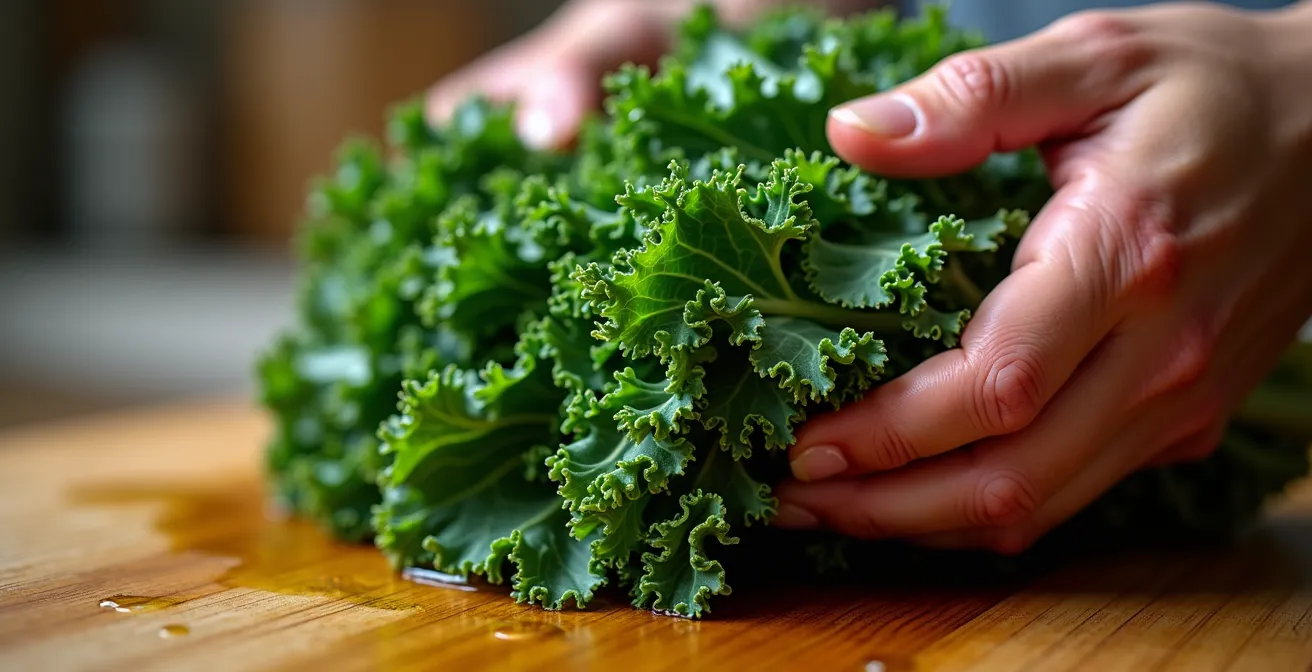
As you can see in the textural transformation, this technique makes the leaves tender and vibrant without any heat application. It’s a powerful strategy for anyone prioritizing the full spectrum of phytonutrients over mineral bioavailability. This presents our second trade-off: to get the most sulforaphane, you must protect the myrosinase enzyme from heat, making a gentle steam or, even better, a raw, massaged preparation the optimal choice. This method is ideal for salads or as a base for dishes where you want a tender texture without cooking.
Sauerkraut vs Kimchi: Which Ferment is Easier for Beginners?
Expanding beyond the simple dichotomy of steaming versus boiling, fermentation offers a third, highly sophisticated pathway for nutrient optimization that appeals directly to the bio-hacker mindset. Fermentation is a metabolic process where microorganisms like bacteria and yeast convert carbohydrates into alcohol or organic acids under anaerobic conditions. In the context of vegetables like kale, this process is known as lacto-fermentation. It not only preserves the food but fundamentally transforms its nutritional profile, creating benefits that raw or cooked kale cannot offer.
The primary advantage is the introduction of probiotics. These beneficial bacteria colonize the gut, improving digestive health, enhancing immune function, and even influencing mood. But the benefits don’t stop there. The fermentation process can increase the bioavailability of certain vitamins, including B vitamins, and predigest the tough fibers of kale, making it easier on the digestive system. Furthermore, it can reduce anti-nutrients like oxalates and phytic acid, similar to boiling but without the destructive heat that affects other compounds.
Emerging research is beginning to quantify these unique benefits. The first human trial on fermented black kale, for instance, yielded remarkable results. It demonstrated a significant reduction in cholesterol for half of the participants, a notable increase in beneficial gut bacteria like Bifidobacterium, and enhanced production of short-chain fatty acids like butyrate, which are vital for colon health. This positions fermented kale not just as a food, but as a functional synbiotic (containing both prebiotics and probiotics) that actively supports gut microbiome health. While making your own kale-based ferments like sauerkraut or kimchi requires more initial effort, the profound health benefits present a compelling case for it being the most advanced nutrient optimization strategy of all.
Fat Soluble Vitamins: Why You Must Add Avocado to Your Green Smoothie?
The optimization of your kale intake doesn’t end with the cooking method; it extends to what you consume alongside it. This is especially critical when considering fat-soluble vitamins. Unlike water-soluble vitamins (like Vitamin C and B vitamins), which can be absorbed directly into the bloodstream, fat-soluble vitamins require dietary fat to be transported and absorbed by the body. Kale is an exceptional source of Vitamin K, a crucial nutrient for blood clotting and bone health, as well as beta-carotene (a precursor to Vitamin A). Without a fat source in the same meal, a significant portion of these valuable nutrients will simply pass through your system unabsorbed.
This principle is a non-negotiable aspect of nutrient bioavailability. According to established nutritional science, Vitamin K is a fat-soluble vitamin that absolutely requires the presence of lipids for the body to utilize it effectively. This means that eating a bowl of plain steamed kale or drinking a fat-free green smoothie is a suboptimal strategy. To ensure you are getting the full value, you must pair your kale with a healthy fat source. This could be avocado in a smoothie, a drizzle of olive oil on steamed leaves, a handful of nuts or seeds in a salad, or even the fat from a piece of salmon served alongside it.
To put this into practice, you can follow a simple set of guidelines to ensure you’re never missing this crucial step. By consciously adding a fat source to every meal containing kale, you complete the final piece of the absorption puzzle, ensuring these vital nutrients make it from your plate into your cells. This simple habit can dramatically increase the nutritional ROI of your greens.
Action Plan: Optimal Fat Pairing for Kale
- Add a source: Incorporate 1-2 tablespoons of a quality oil like olive or avocado oil per serving of cooked kale.
- Enhance with acid: Include a splash of lemon juice not only for flavor but to help preserve color and enhance the absorption of iron.
- Boost with pepper: Add a pinch of black pepper. The piperine it contains can significantly enhance the bioavailability of various phytonutrients.
- Time it right: Consume the fat source within the same meal as the kale to ensure they are processed together in the digestive system.
- Consider pairings: For smoothies, blend with avocado or a tablespoon of chia seeds. For salads, use an oil-based vinaigrette and top with nuts.
How Fast Does Broccoli Lose Vitamin C After Cutting?
Among all the nutrients in kale, Vitamin C is perhaps one of the most volatile and susceptible to degradation. As a water-soluble antioxidant, it is sensitive to heat, light, and oxygen. The moment you cut kale, you initiate an enzymatic process that begins to degrade its Vitamin C content. This degradation accelerates dramatically when heat is applied. This extreme sensitivity makes Vitamin C a perfect case study for the “biochemical trade-off” concept. For example, a 2012 study highlights this disparity vividly: Cooking kale can result in an 89% loss of Vitamin C, while the more stable fat-soluble beta-carotene sees only a 5% loss.
This highlights the massive cost of cooking if your primary goal is Vitamin C intake. However, for the bio-hacker, this isn’t an impasse but an optimization problem. How can we apply heat to make kale more palatable and digestible while minimizing the destruction of this fragile vitamin? The solution lies in manipulating surface area. Research has shown that steaming whole, intact kale leaves *before* chopping them results in significantly better nutrient retention. By keeping the leaves whole during the brief cooking process, you minimize the surface area exposed to heat and oxidation.

This simple procedural change can have a profound impact, with studies indicating that this method can reduce Vitamin C loss by approximately 50% compared to steaming pre-chopped kale. After a short, one-to-two-minute steam, you can then chop the wilted leaves. This “whole-leaf steaming” technique is a prime example of how a small change in process, informed by biochemistry, can yield a vastly superior nutritional outcome. It’s the perfect compromise between the benefits of cooking and the preservation of heat-labile nutrients.
When to Shop to Ensure Your Fresh Produce Lasts Until Friday?
The quest for nutrient optimization begins long before you turn on the stove; it starts in the grocery aisle. The “fresh is best” mantra is deeply ingrained, but from a biochemical standpoint, it’s not always accurate. Fresh produce begins to lose its nutritional value from the moment it is harvested due to respiration and enzymatic degradation. A head of kale that has been sitting in the supply chain for a week before you even buy it has already lost a significant portion of its most volatile nutrients, particularly Vitamin C.
This is where the frozen food aisle becomes an unexpectedly strategic option. Produce destined for freezing is typically flash-frozen within hours of being picked, a process that locks in its nutrient content at its peak. This effectively halts the degradation process. Consequently, a surprising body of research shows that frozen produce can be nutritionally superior to its “fresh” counterparts that have endured long transit and storage times. For instance, some analyses have shown that frozen kale can exhibit a 60% higher antioxidant capacity than fresh kale that has been stored for several days.
For the bio-hacker, this means making a calculated choice. If you have access to a farmer’s market where the kale was picked that morning, fresh is undoubtedly the winner. However, if you are buying from a large supermarket, and you don’t plan to use the kale for several days, choosing frozen may provide a higher and more consistent nutrient load. The optimal strategy is to buy fresh for immediate use (within 1-2 days) and rely on frozen for stocking up your freezer, ensuring you always have a peak-nutrient option on hand.
Water Glass Method: How to Keep Parsley Fresh for 2 Weeks in the Fridge?
Once you’ve procured high-quality kale, proper storage becomes the next critical control point in preserving its nutrient density. Improper storage can accelerate wilting and nutrient loss, negating the benefits of careful selection. The goal of storage is to control two factors: moisture and temperature. You want to keep the leaves hydrated enough to prevent wilting but dry enough on the surface to prevent rot and mold. For a truly optimized approach, you should tailor your storage method to the specific type of kale you’ve purchased.
Before any storage, it’s essential to select the best possible product. An expert source like the Mayo Clinic Health System provides clear guidance on what to look for:
The leaves and stalks should be dark green with small- to medium-sized leaves free of any yellowing or browning. Kale leaves should be firm and dry, not wilted and mushy.
– Mayo Clinic Health System, The Many Types and Health Benefits of Kale
Once you have your pristine kale, apply a variety-specific storage method. Different kale types have different structures and respond best to different conditions. Following these guidelines can extend the life and nutrient value of your kale significantly, often up to a week or more.
- For Lacinato (Dinosaur) Kale: This variety has a thick, fibrous stem. Treat it like a bouquet of flowers. Trim the stems and place the bunch upright in a glass with an inch of water. Cover loosely with a plastic bag and store in the fridge.
- For Curly Kale: This variety is more delicate. The key is humidity control. Do not wash it before storing. Wrap the dry bunch in a layer of paper towels to absorb excess moisture, then place it inside a perforated plastic bag in the crisper drawer.
- General Best Practices: Always keep leaves as dry as possible to prevent premature decay. The ideal storage temperature is in the 32-35°F (0-2°C) range. For the water glass method, be sure to change the water every 2-3 days to prevent bacterial growth.
Key takeaways
- The optimal cooking method for kale is not universal; it’s a strategic choice based on whether you want to prioritize mineral bioavailability (boiling) or preserve delicate phytonutrients (steaming).
- Maximizing nutrient absorption requires a holistic approach, including pairing kale with healthy fats for fat-soluble vitamins like Vitamin K.
- Nutrient optimization starts before cooking, with proper selection (fresh vs. frozen) and storage techniques tailored to the kale variety to minimize degradation.
Post-Workout Nutrition: What to Eat Within 30 Minutes to Maximize Muscle Recovery?
Now, let’s apply this layered understanding of kale biochemistry to a specific, high-stakes scenario: post-workout nutrition. In the 30-60 minute window after intense exercise, your body is in a state of inflammation and is primed for nutrient uptake to repair muscle tissue and replenish glycogen stores. Kale, prepared correctly, can be an outstanding component of a recovery meal due to its potent anti-inflammatory properties and dense nutrient profile. Its high content of antioxidants, especially vitamins A and C, helps combat the oxidative stress induced by exercise. Indeed, a single serving of kale can deliver over 100% of the RDI for Vitamin A and over 40% for Vitamin C.
In this context, both speed and nutrient preservation are paramount. You need a method that is quick but doesn’t obliterate the very compounds you need for recovery. This is where an advanced technique like pressure steaming (or “zero-minute” pressure cooking) becomes the ultimate bio-hack. By bringing a pressure cooker to high pressure with a small amount of water and then immediately releasing it, you cook the kale in a matter of seconds. This method is exceptionally effective at preserving the heat-sensitive glucosinolates compared to boiling, while being significantly faster than traditional steaming.
This makes it the ideal choice for a post-workout scenario. You can quickly prepare the kale and add it to a protein-rich smoothie or serve it alongside a source of lean protein like eggs or chicken. By combining the knowledge of nutrient volatility with a time-efficient cooking technology, you create a recovery meal that is both fast and biochemically optimized. It’s the perfect synthesis of all the principles we’ve discussed: a targeted cooking method chosen to maximize specific, high-value compounds in a time-sensitive context.
Ultimately, transforming your kale from a simple vegetable into a high-performance nutritional tool requires moving beyond generic advice. By applying these biochemical principles, you can tailor your preparation method to your specific health goals and ensure you are capturing the maximum value from every leaf.