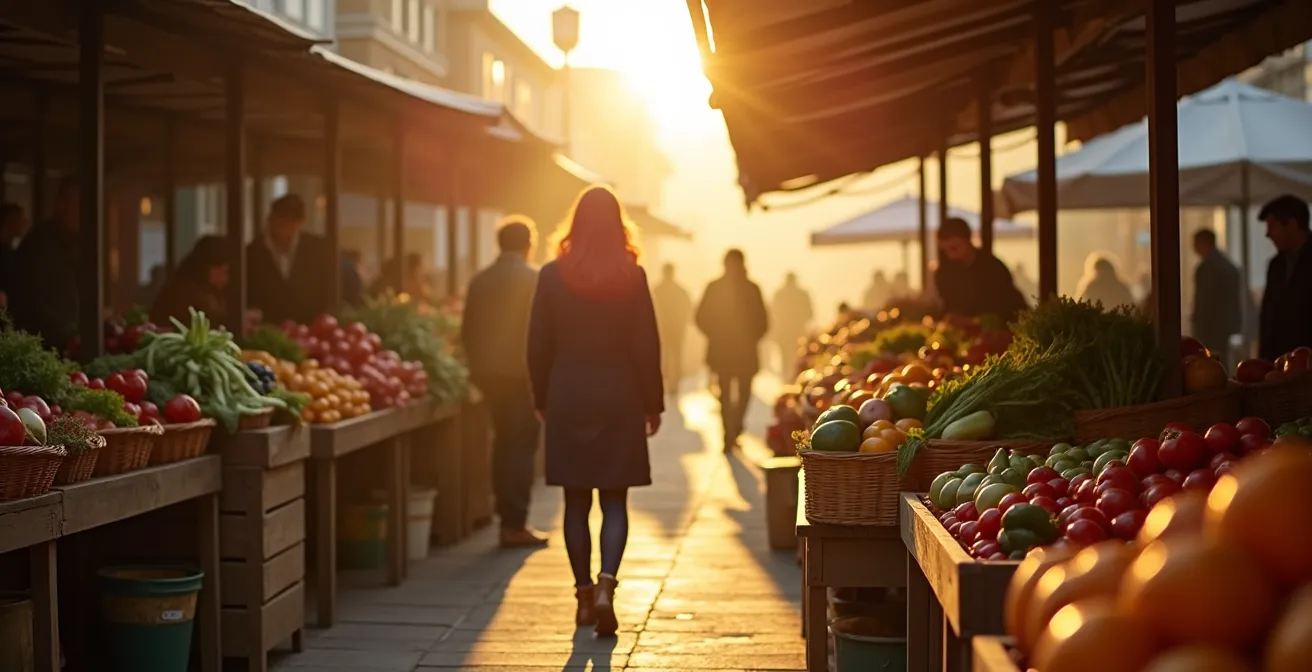
Most advice for farmers market shopping is wrong. The secret to getting the best deals isn’t just arriving late; it’s about understanding the market’s hidden economy. This guide reframes your approach from a simple consumer to a strategic sourcer, showing you how to identify true value, embrace imperfections, and prioritize the things that actually create flavor—seasonality and freshness—just like a professional chef.
The scene is idyllic: canvas totes, the smell of fresh soil and sweet fruit, and tables overflowing with vibrant produce. Yet for many home cooks, the farmers market can feel intimidating and expensive. You want to support local farmers, but the prices often seem higher than the supermarket, and the pressure to choose the “best” of everything can be overwhelming. The common advice—to go late for deals or just “talk to the farmer”—only scratches the surface.
As a chef, my entire craft is built on sourcing the best possible ingredients. We don’t just “shop”; we build relationships and understand the rhythm of the land. The real key to unlocking the farmers market’s potential isn’t about haggling over a bunch of carrots. It’s about a fundamental shift in mindset: from being a passive shopper to becoming an active, strategic sourcer for your own kitchen. It’s about learning to see value where others see flaws and prioritizing flavor above all else.
This isn’t about saving a few cents. It’s about accessing a level of quality and flavor you can’t find anywhere else. It means understanding the “back-of-the-stall” economy, knowing why a January tomato is a culinary crime, and recognizing that the most flavorful carrot might not be the most “perfect”-looking one. It’s time to learn the system that chefs use every week.
This guide will walk you through the core principles of sourcing like a professional. We’ll explore how to find value in imperfections, make informed choices between local and organic, and understand the deep importance of seasonality. You’ll learn the techniques to store your haul for the long term and identify true freshness, transforming your home cooking from the ground up.
Summary: Your Guide to Strategic Sourcing at the Farmers Market
- Seconds and Imperfects: Is “Ugly” Fruit Just as Nutritious?
- Local Conventional vs Imported Organic: Which is the Lower Carbon Choice?
- Why Tomatoes in January Taste Like Water (And What to Buy Instead)?
- CSA Boxes: Is the “Mystery Box” Model Worth the Lack of Choice?
- How to Store a Bushel of Apples to Last Through Winter?
- Supermarket Carrots vs Heirloom: Is the Flavor Difference Worth the Cost?
- Why You Should Stop Buying Strawberries in December?
- The Gill Check: How to Identify Truly Fresh Fish at the Supermarket Counter?
Seconds and Imperfects: Is “Ugly” Fruit Just as Nutritious?
Let’s clear this up immediately: “ugly” produce is a myth created by cosmetic supermarket standards. A misshapen tomato, a scarred apple, or a forked carrot is nutritionally identical to its perfectly symmetrical counterpart. The flavor, vitamins, and minerals are all there. For a chef, these “seconds” or “imperfects” aren’t flaws; they represent the heart of the back-of-the-stall economy—an opportunity for incredible value that most shoppers walk right past.
Farmers pick and sort for restaurants and retail first, but they always have produce that doesn’t make the aesthetic cut. This is what they use for their own families and what savvy chefs seek out for sauces, soups, and preserves. By asking for these items, you’re not insulting the farmer; you’re showing you understand the reality of farming and value the food for what it is, not just how it looks. This is a key part of strategic sourcing. An excellent example of this model in action is the $25 bag deal at Perkins Orchard in Durham, NC, where customers fill a bag with produce, demonstrating a successful way for farmers to move imperfect goods while offering fantastic value.
Embracing these seconds is the single fastest way to reduce your farmers market bill while getting the same high-quality flavor. It requires you to be flexible—you might go looking for perfect tomatoes for a salad but leave with a box of bruised ones perfect for a rich, slow-cooked sauce. This adaptability is the hallmark of a great cook.
Action Plan: How to Negotiate for Seconds
- Arrive about 30 minutes before the market closes, when vendors are more open to negotiating to avoid taking produce home.
- Ask specifically for produce for “canning or preserving.” This signals you understand what seconds are for and aren’t just looking for “cheap” food.
- Offer to buy in bulk. Asking for a price on a whole case or bushel is much more effective than haggling over a single pound.
- Build a relationship first. Become a regular customer; vendors often reward loyalty by adding extra items to your bag.
- Look for crates stored behind or under the main display tables, as this is often where seconds are kept out of sight.
Local Conventional vs Imported Organic: Which is the Lower Carbon Choice?
The “organic” sticker can feel like an automatic stamp of approval, but the choice is rarely that simple. When you’re standing at a market stall, the real dilemma is often between a conventionally grown zucchini from a farm 20 miles away and an organic one that flew in from another continent. As a chef focused on sustainability and flavor, the choice is clear: local almost always wins. The carbon footprint of food is heavily influenced by “food miles”—the distance it travels from farm to plate.
Long-distance transport requires refrigeration, packaging, and fuel, all of which carry a significant environmental cost that often outweighs the benefits of the organic certification itself. Furthermore, “local conventional” farmers at a market frequently use minimal and targeted pesticide applications, a practice known as Integrated Pest Management (IPM). They are often happy to discuss their growing methods with you, offering a level of transparency you’ll never get from a label on a product from thousands of miles away.
Freshness is also a major factor. Local produce is typically harvested within 24-48 hours of sale, preserving its nutrient density and flavor terroir. Imported produce can be weeks old by the time it reaches you, losing both nutritional value and the vibrant taste that brought you to the market in the first place. The decision requires a more nuanced view than simply looking for a certified label.
To make an informed decision, it’s helpful to weigh the different factors involved, as this comparative analysis of local versus imported produce highlights.
| Factor | Local Conventional | Imported Organic |
|---|---|---|
| Carbon Footprint | Lower transport emissions (under 50 miles) | Higher due to long-distance shipping |
| Freshness | Harvested within 24-48 hours | Can be weeks old after transport |
| Growing Practices | May use pesticides but often minimal | No synthetic pesticides but may use approved organic ones |
| Water Usage | Varies by local climate | Often grown in water-stressed regions |
| Price | Generally lower | Premium pricing for certification |
Why Tomatoes in January Taste Like Water (And What to Buy Instead)?
Buying a bright red tomato in the dead of winter is an act of culinary despair. It may look the part, but its flavor is a pale, watery ghost of what a tomato should be. This isn’t an accident; it’s a consequence of fighting nature. A true summer tomato, ripened on the vine under a hot sun, develops a complex balance of sugars and acids. This is what creates that explosive, sweet-tart flavor we crave. A winter tomato is a different beast entirely. It’s typically picked green and hard to withstand long-distance shipping, then artificially “ripened” in a warehouse with ethylene gas.
This process gives the tomato its red color, but it completely bypasses the natural flavor development. The result is a texture that’s often mealy and a taste that’s bland and acidic. As a chef, I consider using out-of-season tomatoes a cardinal sin. Why force an ingredient to be something it’s not when winter offers its own spectacular bounty? Instead of chasing the ghost of summer, embrace the robust, earthy flavors of the cold months.
This is the time for sweet, caramelized root vegetables, hardy greens that turn sweet after a frost, and earthy, umami-rich mushrooms. Roasting parsnips, carrots, and beets brings out their intense, concentrated sweetness. A simple dish of roasted winter vegetables has more integrity and flavor than any salad made with watery winter tomatoes.

As the image above illustrates, winter produce has its own deep, complex beauty. Learning to love what the current season provides is the essence of farm-to-table cooking. It forces creativity and connects you more deeply to the rhythm of the year, making you a better, more intuitive cook.
CSA Boxes: Is the “Mystery Box” Model Worth the Lack of Choice?
Joining a Community Supported Agriculture (CSA) program is the ultimate commitment to local eating. You pay a farm upfront for a “share” of the upcoming harvest, and in return, you get a weekly box of whatever is fresh and abundant. For some, the lack of choice in this “mystery box” model is a dealbreaker. But for a strategic sourcer, it’s a creative opportunity. It forces you to cook with ingredients you might not normally choose, expanding your culinary repertoire and eliminating decision fatigue.
More importantly, a CSA provides a direct, powerful connection to the farm and the farmer. In a world where a recent American Farm Bureau study found that 72% of consumers know ‘nothing’ or ‘very little’ about farming, a CSA is a tangible education. You experience the rhythm of the seasons firsthand—the flood of zucchini in July, the bounty of apples in October. This understanding is invaluable and fosters a deeper appreciation for your food.
The key to success with a CSA is flexibility and planning. Instead of planning a specific recipe and then shopping, you must reverse the process: get your box, see what you have, and then plan your meals. This is exactly how restaurant menus are often created. To make the most of it:
- Plan meals around expected seasonal items rather than specific, rigid recipes.
- Join CSA member groups on social media to arrange produce swaps for items you have in excess.
- Learn basic preservation techniques like freezing, pickling, or canning to handle any surplus and prevent waste.
- Ask your farmer about customization options; many now offer add-ons like eggs, meat, or cheese.
A CSA isn’t just a box of vegetables; it’s an investment in your local food system and a masterclass in seasonal cooking.
How to Store a Bushel of Apples to Last Through Winter?
One of the biggest shifts from shopper to sourcer is thinking in terms of bulk. When you see a farmer offering a bushel of apples at a significant discount in the fall, a shopper sees inconvenience; a chef sees an opportunity. Buying in bulk is a cornerstone of strategic sourcing, allowing you to lock in peak-season flavor and value for months to come. But this strategy is only effective if you have a proper storage plan. Tossing a bushel of apples into a bin in your kitchen is a recipe for rot.
The secret to long-term apple storage lies in controlling two factors: temperature and ethylene gas. Apples, like many fruits, release ethylene as they ripen, which in turn signals nearby apples to ripen and eventually rot faster. The goal is to isolate each apple to prevent a chain reaction. Furthermore, a cold, humid environment slows the ripening process to a crawl. The ideal conditions—around 30-40°F with high humidity—mimic an old-fashioned root cellar.
Most of us don’t have a root cellar, but a cool basement, an unheated garage, or even a second refrigerator can work. The method is simple but requires diligence. By following a professional process, you can enjoy crisp, flavorful apples from your fall market haul well into February.
- Inspect every single apple. Remove any with bruises, soft spots, or broken skin. These should be eaten first, not stored.
- Wrap each apple individually in a piece of newspaper. This is the crucial step for ethylene management, as it isolates each apple.
- Place the wrapped apples in a ventilated crate or cardboard box, ensuring they are not packed too tightly.
- Store the box in the coldest, most humid part of your home that doesn’t freeze.
- Check on your apples weekly. Remove any that show signs of spoilage immediately to protect the rest.
This same principle of preservation applies to many other bulk purchases, with resources from experts like the University of Minnesota Extension offering guidance on freezing and canning to preserve your market bounty.
Supermarket Carrots vs Heirloom: Is the Flavor Difference Worth the Cost?
The perfectly uniform, plastic-bagged “baby” carrots from the supermarket are a modern food product, not a vegetable in its natural state. Most are not immature carrots but rather mature, less-than-perfect ones that have been machined down to a uniform size and shape, then often washed in a mild chlorine solution to preserve them. This process strips away not only their character but also much of their potential flavor. They are convenient, but they offer a bland, one-note sweetness.
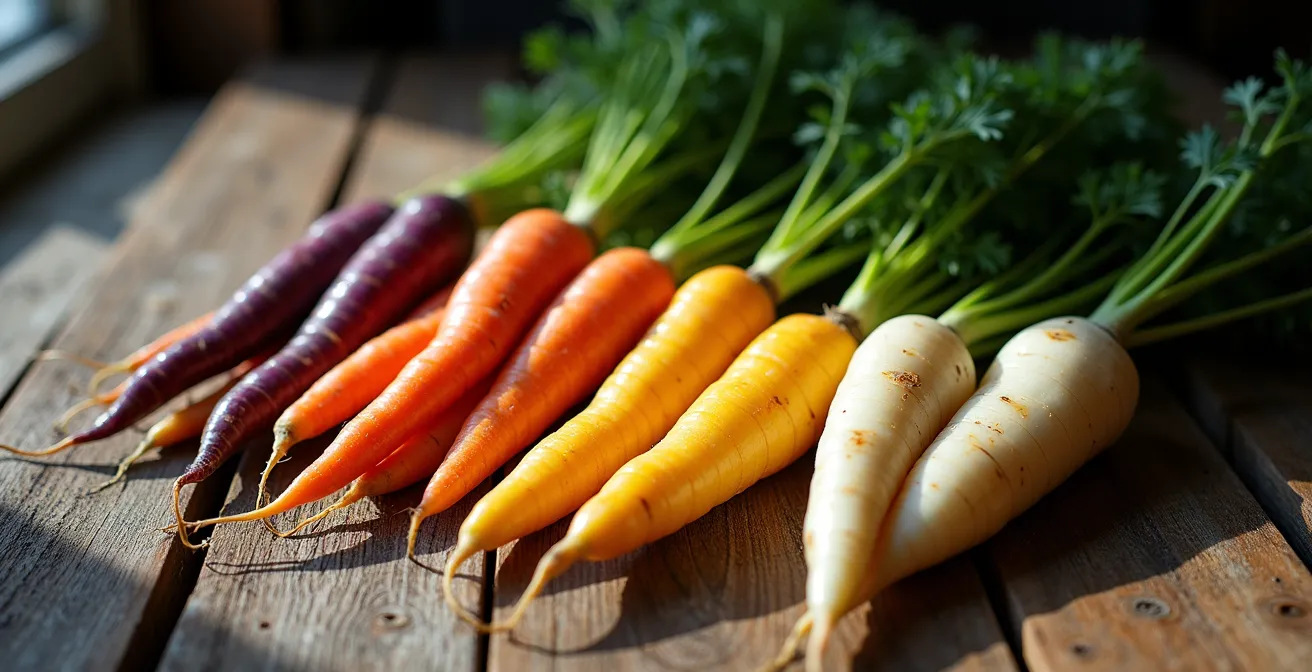
Heirloom carrots from the farmers market, on the other hand, are a lesson in flavor terroir. The term, borrowed from the wine world, refers to the way a food’s environment—soil, climate, and genetics—shapes its taste. At the market, you’ll find carrots in a rainbow of colors: deep purples, sunny yellows, and creamy whites. These aren’t just for show; each color signifies a different profile of phytonutrients and a unique flavor. Purple carrots can have a spicy, almost peppery note, while yellow ones are often milder and sweeter.
Is the flavor difference worth the cost? For a chef, the answer is unequivocally yes. You are paying for genetic diversity, superior farming practices, and a complexity of flavor that can elevate a simple dish from mundane to memorable. The higher price reflects the lower yield of heirloom varieties and the manual labor involved in harvesting them. When you roast a bunch of multi-colored heirloom carrots, you’re not just cooking a side dish; you’re tasting a direct expression of the soil and the season.
The contrast between these two products becomes stark when you compare them side-by-side, as detailed in a breakdown of carrot varieties.
| Aspect | Supermarket ‘Baby’ Carrots | Farmers Market Heirloom |
|---|---|---|
| Processing | Machine-cut mature carrots, chlorine washed | Whole, unwashed or minimally processed |
| Flavor Profile | Mild, uniform sweetness | Complex, varied (floral, earthy notes) |
| Varieties | Usually one type (Imperator) | Multiple colors and shapes available |
| Nutritional Value | Standard beta-carotene levels | Higher antioxidant diversity in purple/yellow varieties |
| Price per pound | $1.50-2.50 | $3.00-5.00 |
Why You Should Stop Buying Strawberries in December?
Much like winter tomatoes, the strawberries available in December are a triumph of logistics over flavor. These berries are bred for durability, not taste. They need to withstand being picked under-ripe, packed, and shipped thousands of miles. By the time they arrive in your local supermarket, they may look red and appealing, but they lack the fragrant aroma and intense sweetness of a locally grown, in-season strawberry.
The trade-off goes beyond just flavor. It extends to nutrition. A berry ripened naturally in the sun develops a full profile of vitamins and antioxidants. Research has shown significant nutrient degradation in out-of-season produce that travels long distances. For instance, some studies suggest up to 50% less Vitamin C in winter strawberries compared to their summer counterparts. You’re paying a premium price for a product that is inferior in both taste and nutrient density.
A strategic sourcer doesn’t fight the seasons; they work with them. Craving that berry flavor in winter is a perfect opportunity to explore the preservationist’s pantry. Instead of buying disappointing “fresh” imports, turn to smarter alternatives:
- Flash-frozen berries: Berries frozen at peak ripeness often retain more nutrients and flavor than out-of-season “fresh” ones.
- High-quality preserves: A spoonful of well-made strawberry jam from a summer market vendor can deliver a concentrated burst of true berry flavor.
- Seasonal citrus: Embrace what winter naturally provides. Oranges, grapefruits, and clementines are at their peak and offer the Vitamin C you’re seeking.
- Dried berries: These are excellent for baking, adding a chewy, concentrated sweetness to scones or granola.
By making these seasonal pivots, you support a more sustainable food system and train your palate to appreciate ingredients at their absolute best.
Key takeaways
- Embrace ‘imperfections’ and the back-of-the-stall economy for unbeatable value and flavor.
- Prioritize seasonality and local sourcing over distant organic labels for superior taste and nutrient density.
- Think like a preservationist by planning for bulk buys and long-term storage to maximize your market haul.
The Gill Check: How to Identify Truly Fresh Fish at the Supermarket Counter?
The principles of strategic sourcing don’t stop at the produce stall; they are just as crucial at the fish counter. The word “fresh” is one of the most misleading terms in the food industry. Fish labeled “fresh” may have been sitting on ice for days, slowly losing its texture and flavor. A chef knows that the freshest fish is often, counter-intuitively, frozen.
The Chef’s Secret: The Flash-Frozen at Sea (FAS) Advantage
Many professional chefs actively prefer fish that is Flash-Frozen at Sea (FAS) over most “fresh” options. FAS fish is caught, processed, and frozen solid within hours of being pulled from the water. This process locks in the fish’s natural texture and moisture perfectly. In contrast, “fresh” fish that was trucked or flown in might be 3-5 days old by the time it hits the counter, during which time its cells have begun to break down. This challenges the common assumption that fresh is always superior and highlights why understanding the supply chain is critical.
If you are buying from a “fresh” counter, you need to become an inspector. Your senses are your best tools. Don’t be afraid to ask questions and look closely. A good fishmonger will be happy to demonstrate the quality of their product. You’re looking for signs of vitality, not decay.
Here is your checklist for assessing freshness:
- Ask the right questions: Don’t ask “Is this fresh?” Ask “When did this shipment arrive?” and “Was this air-freighted or trucked?”
- Check the gills: On a whole fish, the gills should be a vibrant, bright red. Brown or pale gills are a sign of age.
- Press the flesh: Gently press the fish with your finger. The flesh should be firm and spring back immediately. If it leaves an indentation, the fish is not fresh.
- Use your nose: The fish should smell clean, like the ocean or a fresh lake. A strong, “fishy” or ammonia-like smell is a clear warning sign.
- Look at the eyes: On a whole fish, the eyes should be clear, bright, and slightly bulging, not cloudy or sunken.
By applying this level of scrutiny, you ensure that the money you spend on high-quality seafood is rewarded with superior flavor and texture.
Your next trip to the market is an opportunity to practice this new mindset. Go beyond the perfect displays, talk to the people who grow your food, and start sourcing ingredients with the passion and strategy of a chef.