Feeding your family healthily on a tight budget isn’t about finding cheap recipes; it’s about implementing a zero-waste, decision-free food operating system.
- Transform single protein purchases into three distinct meals using the “protein cascading” method to eliminate waste.
- Reduce decision fatigue and planning time by over 75% with a flexible “theme night” schedule.
- Combine strategic shopping trips with efficient Sunday prep to make nutritious 20-minute dinners a reality.
Recommendation: Adopt this integrated system to save money, reduce stress, and reclaim your weeknights.
Staring into the fridge at 5 PM, wondering how to turn a random assortment of ingredients into a healthy meal your family will actually eat, is a uniquely modern form of parental stress. The pressure is immense: feed your children nutritious food, don’t break the bank—especially with rising grocery prices—and somehow have it all on the table before the evening descends into chaos. You’ve likely heard the standard advice: clip coupons, buy in bulk, and meticulously plan every meal. But these are just disconnected tactics, not a sustainable strategy. They often fail to address the core issues of decision fatigue, food waste, and the simple, crushing lack of time.
What if the solution wasn’t about working harder, but about working smarter? What if you could build a streamlined food operating system for your home? This isn’t about rigid, boring meal plans or spending your entire Sunday chained to the stove. It’s about a strategic framework that simplifies how you shop, prep, and cook, turning leftovers into planned-overs and making healthy choices the easiest choices. This system is designed to drastically cut down on food waste, which is a major budget drain, while freeing up your mental energy for more important things.
This guide will walk you through the pillars of this system. We’ll deconstruct the real cost of convenience, show you how to prep smarter (not harder), and introduce proven strategies for getting kids on board with new foods. You will learn how to transform one key ingredient into a cascade of different meals, when to shop for maximum freshness, and how to create a weekly rhythm that makes “What’s for dinner?” a question you no longer dread. Get ready to move beyond simple tips and build a resilient, budget-friendly meal strategy that truly works for your family.
This article provides a comprehensive roadmap to building your own family food operating system. Below is a summary of the key strategies we will explore to help you save time, money, and stress in the kitchen.
Summary: Your Roadmap to a $150/Week Family Meal System
- Why Pre-Cut Vegetables Cost You 40% More Than Whole Produce?
- How to Prep 3 Days of Dinners in 90 Minutes on Sunday?
- The “Safe Food” Strategy That Encourages Kids to Try New Vegetables
- Chicken Roast to Tacos: The Flowchart for Zero-Waste Weekly Eating
- When to Shop to Ensure Your Fresh Produce Lasts Until Friday?
- How to Build a ‘Theme Night’ Schedule That Reduces Decision Fatigue?
- Boxed Broth vs DIY: How Much Sodium Do You Really Save?
- How to Cook Nutritious Foods Quickly When You Only Have 20 Minutes?
Why Pre-Cut Vegetables Cost You 40% More Than Whole Produce?
The siren song of pre-cut vegetables is hard to resist. A container of perfectly diced onions or spiralized zucchini promises to save you precious minutes during the weeknight dinner rush. However, this convenience comes at a staggering, often hidden, cost that impacts both your wallet and your family’s nutrition. While the label might suggest a small premium, the reality is that you are paying for labor, processing, and packaging, not just produce. In some cases, pre-cut vegetables can cost triple the price of their whole counterparts, adding up to a significant portion of your weekly budget.
Consider a simple red onion. A market analysis found that whole red onions at a major retailer cost $0.49 per pound, while the pre-diced version from the same store cost $4.00 per pound—an increase of over 700%. This isn’t an isolated case; the markup on items like butternut squash and fruit is similarly dramatic. Beyond the financial drain, there is a nutritional cost. The moment a fruit or vegetable is cut, it begins to lose vital nutrients like Vitamin C and A through oxidation. This process, known as nutrient depreciation, means that by the time those pre-cut veggies reach your pan, they are less nutritious than the whole version you could have chopped yourself.
Of course, the decision isn’t always black and white. For parents with physical limitations or those in an extreme time crunch, the premium may be a worthwhile trade-off. The key is to make this a conscious, strategic choice rather than a default habit. By investing just a few minutes in chopping your own produce, you gain significant budget savings, higher nutritional value, and longer shelf life, forming the first critical efficiency in your family’s food operating system.
How to Prep 3 Days of Dinners in 90 Minutes on Sunday?
The concept of “meal prep” often conjures images of countless identical containers filled with dry chicken and broccoli, a prospect that excites almost no one. A more effective and sustainable approach is “component cooking.” Instead of preparing entire finished meals, you focus on prepping versatile ingredients that can be quickly assembled into different dishes throughout the week. This method provides flexibility and variety, preventing the flavor fatigue that dooms most rigid meal plans.
In just 90 minutes on a Sunday, you can create the building blocks for at least three distinct weeknight dinners. The process is simple: dedicate 30 minutes to each category.
- Grain Prep (30 mins): Cook a large batch of a versatile grain like quinoa, brown rice, or farro.
- Protein Prep (30 mins): Brown a pound of ground turkey, bake some chicken breasts with a neutral seasoning, or hard-boil a dozen eggs.
- Vegetable Prep (30 mins): Wash and chop hearty vegetables like bell peppers, onions, carrots, and broccoli. Store them in airtight containers.
This strategy, as demonstrated by budget cooking expert Julia Pacheco who prepares meals for a month on a tiny budget, relies on creating a “bank” of ready-to-use ingredients. A batch of cooked quinoa can become the base for a stir-fry on Monday, a grain salad on Tuesday, and a component in stuffed peppers on Wednesday. You’re not just saving time; you’re creating a flexible system that adapts to your cravings.
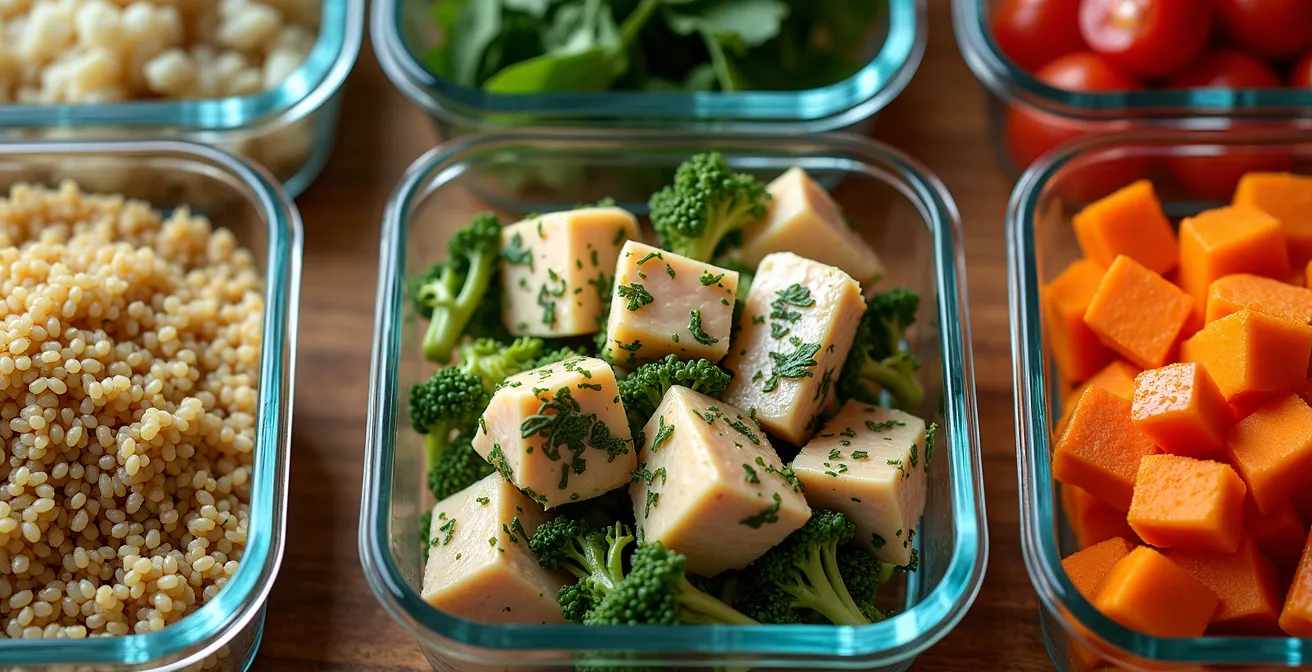
As you can see, an organized station is key. With these components prepped and ready, assembling a healthy dinner takes minutes, not an hour. It’s the difference between cooking from scratch every night and simply assembling a delicious, pre-planned meal. This is the engine of your food operating system, turning a Sunday time investment into weeknight freedom.
The “Safe Food” Strategy That Encourages Kids to Try New Vegetables
One of the biggest hurdles in feeding a family healthy food is the “picky eater” phenomenon. You can prepare the most nutritious, budget-friendly meal, but it provides zero benefit if your child refuses to eat it. This often leads to power struggles, frustration, and the temptation to become a short-order cook. The solution lies in a pressure-free approach centered on the concept of a “safe food.” This strategy is rooted in a proven feeding model that empowers both parent and child.
The principle, articulated by the Ellyn Satter Institute, is called the Division of Responsibility in Feeding. It’s a simple but profound idea, as one practitioner explains:
The parent’s job is to provide the food, and the child’s job is to decide if and how much to eat. The ‘safe food’ on the plate is the key that removes pressure and battles.
– Division of Responsibility in Feeding Model, Ellyn Satter Institute feeding principles
In practice, this means every meal should include at least one item you know your child will eat, like a simple portion of rice, a piece of bread, or their favorite fruit. This “safe food” removes the fear and anxiety of being faced with an entirely new or disliked plate of food. With the pressure off, a child is more open to exploring the other items on their plate without a fight. This builds trust and positive associations with mealtime, which is the foundation for developing an adventurous palate over the long term.
To further encourage exploration, you can use a “Progressive Tasting Ladder.” This breaks down the process of trying a new food into tiny, manageable steps, allowing the child to move at their own pace:
- Step 1: Tolerate the new food on the plate without touching it.
- Step 2: Touch or play with the food.
- Step 3: Help wash or prepare the vegetable.
- Step 4: Smell the food or bring it close to their face.
- Step 5: Lick or “kiss” the food.
- Step 6: Take a tiny, “mouse-sized” taste.
This patient, respectful method is a core part of a healthy family food system, focusing on long-term wins over short-term mealtime battles.
Chicken Roast to Tacos: The Flowchart for Zero-Waste Weekly Eating
Food waste is one of the biggest silent budget killers. A truly efficient food operating system is built on a zero-waste philosophy, where every ingredient is used to its fullest potential. A powerful technique to achieve this is “ingredient cascading” or “protein cascading.” This is the art of transforming one main protein purchase into two or three completely different meals throughout the week, ensuring nothing goes to waste and your family doesn’t get bored.
This isn’t just about eating leftovers; it’s a planned transformation. Frugal living expert Jordan Page, with her family of 10, perfects this method. A single roast chicken on Sunday becomes the anchor for a cascade of meals:
- Day 1: Classic Roast Chicken with roasted vegetables.
- Day 2: Leftover chicken meat is shredded and simmered with Mexican spices for delicious chicken tacos.
- Day 3: The chicken carcass, which might otherwise be thrown away, is simmered in a slow cooker to create a rich, homemade broth for a hearty chicken noodle soup.
This systematic approach maximizes the return on your most expensive grocery items. The same principle can be applied to other anchor proteins, like a large pork shoulder (pulled pork -> pork fried rice -> pork and bean stew) or even plant-based proteins like lentils.
This table illustrates how three different anchor proteins can be transformed, dramatically lowering the cost per serving while delivering variety.
| Anchor Protein | Day 1 Meal | Day 2 Transformation | Day 3 Final Use | Cost per Serving |
|---|---|---|---|---|
| Whole Chicken ($8) | Roast Chicken Dinner | Chicken Tacos/Burritos | Chicken Soup from Broth | $0.67 |
| 2 lbs Lentils ($3) | Lentil Curry | Lentil Shepherd’s Pie | Lentil Patties/Burgers | $0.25 |
| Pork Shoulder ($12) | Pulled Pork | Pork Fried Rice | Pork & Bean Stew | $1.00 |
By planning for this cascade from the beginning, you eliminate food waste by design. You’re not just using leftovers; you’re executing the second and third steps of a pre-planned recipe. This strategy is a cornerstone of a thrifty, efficient kitchen. The data for this approach comes from a variety of budget meal planning experts, including an analysis of extreme budget meal plans that highlights these cascading techniques.
When to Shop to Ensure Your Fresh Produce Lasts Until Friday?
One of the most frustrating budget-killers is produce that wilts, molds, or goes limp before you have a chance to use it. You buy a beautiful head of lettuce on Saturday with the best intentions, only to find a sad, slimy mess in the crisper drawer by Wednesday. The solution isn’t to buy less produce, but to shop more strategically. A strategic split shopping schedule ensures you have fresh, crisp vegetables all week long without extra waste.
The key is to divide your produce into two categories: “hardy” and “delicate.” Hardy produce includes items like potatoes, onions, carrots, cabbage, and apples. These can last for a week or even longer if stored correctly. Delicate produce includes leafy greens, berries, fresh herbs, and zucchini. These items have a much shorter shelf life. For instance, storage research reveals that a whole watermelon can last up to three weeks in the fridge, while cut watermelon is only good for a few days. The same logic applies to nearly all produce.
Your shopping strategy should reflect this. Instead of one massive weekly shop, you’ll do one main shop and one quick, 15-minute mid-week stop. This small change makes a huge difference in food quality and waste reduction. This approach ensures that the produce you plan for Thursday and Friday is just as fresh as what you ate on Monday, making healthy eating more appealing throughout the week.
Your Action Plan: Strategic Split Shopping Schedule
- Weekend Main Shop: Buy all your pantry staples, proteins, and hardy produce (potatoes, carrots, onions, cabbage, apples).
- Meal Planning for Early Week: Plan your Monday-Wednesday meals around the most delicate items purchased during the main shop (leafy greens, berries, mushrooms).
- Proper Storage: Store hardy root vegetables in a cool, dark place (not the fridge) to extend their life. Keep other produce in the appropriate crisper drawers.
- Wednesday 15-Minute Stop: Make a quick trip to the store for only the delicate produce needed for Thursday and Friday’s meals (e.g., a head of lettuce, fresh herbs, asparagus).
- Friday Inventory: Before planning the next week, take stock of any remaining produce to ensure it gets used up over the weekend, starting the zero-waste cycle anew.
How to Build a ‘Theme Night’ Schedule That Reduces Decision Fatigue?
The daily question of “What’s for dinner?” is a significant source of mental clutter, a phenomenon known as decision fatigue. By making countless small decisions all day, our ability to make good choices diminishes. A “theme night” schedule is a simple yet powerful tool to eliminate this daily question, creating a decision-free framework that saves mental energy and streamlines planning.
This isn’t about eating the exact same thing every Tuesday. It’s about creating categories that provide structure while still allowing for flexibility and variety. For example, “Taco Tuesday” doesn’t have to be ground beef tacos every week; it could be chicken tacos, fish tacos, or lentil tacos. The core decision—the *type* of meal—is already made for you. One family of eight found this system so effective that it reduced their meal planning time by 75% while staying on a tight budget. Their themes, like “20-Minute Monday” and “Global Handhelds Tuesday,” are designed to match the family’s energy levels and preferences for that day of the week.
The beauty of this system is its infinite customizability. You can create a schedule that fits your family’s tastes, budget, and cooking style. Below are a few templates to inspire your own theme night schedule.
These templates offer a starting point for different family dynamics, from adventurous eaters to those with pickier palates. An analysis of budget meal plans shows that having a reliable structure is a common thread among families who successfully manage their food budgets without stress.
| Day | The Globetrotter | The Kid-Pleaser | The Super-Saver |
|---|---|---|---|
| Monday | Mediterranean Monday | Mac & Cheese Monday | Meatless Monday (Beans) |
| Tuesday | Taco Tuesday | Chicken Tender Tuesday | Lentil Tuesday |
| Wednesday | Asian Wok Wednesday | Spaghetti Wednesday | Rice Bowl Wednesday |
| Thursday | Italian Thursday | Burger Thursday | Soup & Bread Thursday |
| Friday | Indian Curry Friday | Pizza Friday | Leftover Remix Friday |
Boxed Broth vs DIY: How Much Sodium Do You Really Save?
Boxed or canned broth is a common pantry staple, but it’s often a hidden source of two things: high sodium and unnecessary expense. While a carton of broth seems like a minor purchase, it’s a perfect example of where a small DIY effort can yield significant benefits for both your family’s health and your budget. Making your own broth is a key component of the zero-waste food operating system, transforming kitchen “scraps” into a flavorful, nutritious liquid gold.
From a health perspective, the difference is stark. Many commercial broths contain high levels of sodium, preservatives, and MSG. Even “low-sodium” versions can have more salt than you’d add yourself. By making your own, you have 100% control over the ingredients, especially the sodium content—a critical factor for family health. Financially, the savings are just as compelling. A 32-ounce container of boxed broth can cost $3.00 or more, while homemade broth costs next to nothing, using vegetable scraps (onion peels, carrot ends, celery tops) and a chicken carcass that would have otherwise been discarded. This simple swap can save a family over $100 annually.
The best part is that it requires almost zero active effort. The “overnight slow cooker” method lets you set it and forget it.
- Step 1: Throughout the week, save all your vegetable scraps (onion/garlic skins, carrot peels, celery ends) and leftover chicken bones in a large bag in the freezer.
- Step 2: On a Friday or Saturday night, empty the contents of the freezer bag into your slow cooker.
- Step 3: Add a bay leaf, a teaspoon of whole peppercorns, and cover everything with water.
- Step 4: Set the slow cooker on low and let it simmer for 8-10 hours overnight.
- Step 5: In the morning, simply strain the liquid. You’ll be left with a rich, fragrant, and deeply nutritious broth.
You can then use it immediately for soup or portion it into ice cube trays for easy use in sauces and other recipes.
Key takeaways
- A “Food Operating System” focusing on strategy over tactics is key to sustainable budget cooking.
- “Ingredient Cascading” (e.g., roast chicken -> tacos -> soup) is a powerful method to eliminate food waste and maximize your protein budget.
- Combining “Component Cooking” on weekends with “Strategic Convenience” on weeknights makes healthy 20-minute dinners achievable.
How to Cook Nutritious Foods Quickly When You Only Have 20 Minutes?
The end of a long day is the ultimate stress test for any meal plan. Even with the best intentions, if a recipe takes 45 minutes, the temptation to order takeout can be overwhelming. The final pillar of a successful food operating system is mastering the 20-minute dinner. This isn’t about relying on unhealthy processed foods; it’s about combining your prepped components with a few smart, time-saving shortcuts—a concept known as “Strategic Convenience.”
Not all convenience foods are created equal. The key is to identify which shortcuts save you significant time without compromising nutrition or breaking the budget. Erin Chase of “$5 Dinners” demonstrates this perfectly. She strategically uses items like a store-bought rotisserie chicken ($5-7), which provides ready-to-eat protein for two or three different meals. Another smart shortcut is frozen chopped onions or pre-cooked frozen rice; these items save valuable prep time with minimal nutritional loss and cost, unlike their overpriced fresh, pre-cut counterparts.
With your component-prepped ingredients from Sunday and a few strategic convenience items, a 20-minute dinner becomes a simple assembly job. The formula is straightforward: Pre-cooked Protein + Quick-cooking Grain + Fast-steaming Vegetable + Sauce/Seasoning. For example, you can combine shredded rotisserie chicken with pre-cooked quinoa and a bag of microwavable steamed broccoli. Toss it all in a skillet with a splash of soy sauce or your favorite seasoning, and dinner is on the table in under 10 minutes. This system allows you to consistently get a healthy, home-cooked meal on the table faster than a pizza delivery could arrive.
By shifting your mindset from finding individual recipes to building an integrated food operating system, you can fundamentally change your relationship with cooking. This approach saves you money, drastically reduces food waste, and, most importantly, frees up your time and mental energy. Start by implementing just one of these strategies this week—like theme nights or overnight broth—and build from there. You have the power to create a sustainable, stress-free, and healthy way of feeding your family.