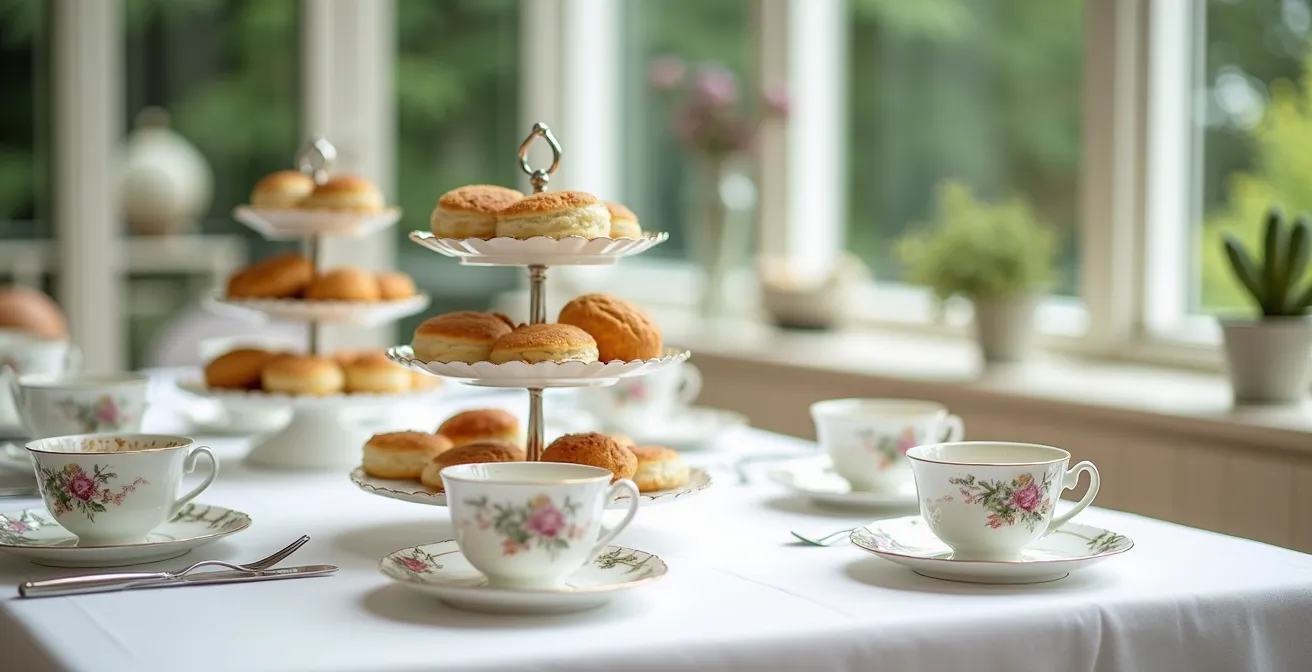
The secret to an impressive afternoon tea is not a complex set of recipes, but a mastery of strategic orchestration: balancing flavors, textures, and timing.
- Prioritize the science of temperature, especially for butter, as it dictates the final texture of your scones and pastries.
- Design a “sensory blueprint” for your pastry selection, guiding guests from light and acidic to rich and complex flavors.
Recommendation: Shift your focus from simply making food to curating an experience. Your success lies in a well-structured timeline that allows for calm, composed assembly on the day of the event.
For the discerning host, planning an afternoon tea is an exercise in elegance and restraint. The goal is to create a moment of refined indulgence that feels both luxurious and effortless for your guests. Many guides will offer lists of recipes, focusing on the what—sandwiches, scones, and sweets. While essential, this approach often overlooks the very element that separates a pleasant gathering from a truly memorable one: strategic orchestration.
The common advice to “plan ahead” or “offer variety” falls short of providing a true framework for success. The true challenge isn’t just baking; it’s the choreography of flavors, the management of time, and the understanding of pastry science. How do you ensure your scones are ethereally flaky and not disappointingly dense? How do you compose a trio of pastries that delights rather than overwhelms the palate? This is where the art of hosting transcends mere cooking and becomes event curation.
But what if the key wasn’t to find more complicated recipes, but to master the foundational principles that govern a flawless service? The secret to impressing your guests lies not in your baking repertoire, but in your sensory blueprint. It is about understanding why a certain tea cuts through richness, why cold butter is your most critical ingredient, and how a meticulously planned timeline is your greatest tool. This guide will provide you with the strategic thinking of a professional event planner, focusing on the principles of timing, temperature, and balance to ensure your afternoon tea is an unqualified success.
This article provides a complete framework for planning your event. Below is a summary of the key strategic pillars we will cover to help you orchestrate an unforgettable afternoon tea experience.
Summary: A Host’s Guide to an Impressive Afternoon Tea Menu
- Butter Temp: The Secret to Flaky Scones vs Dense Biscuits
- Cream, Fruit, Chocolate: How to Balance a Trio of Mini Pastries?
- Earl Grey or Darjeeling: Which Tea Cuts Through Rich Cream Puffs?
- How Many Pastries Per Person for a 2-Hour Tea Event?
- What Can Be Baked 24 Hours Before Your Tea Party?
- Almond and Pear: Why This Frangipane Combo is a timeless Classic?
- Pitcher Cocktails: How to Prep Welcome Drinks Before Guests Arrive?
- How to Coordinate a 3-Course Celebration Dinner for 10 People Without Spending All Day in the Kitchen?
Butter Temp: The Secret to Flaky Scones vs Dense Biscuits
The structural integrity of your most beloved tea-time pastries begins not with a recipe, but with a single, non-negotiable element: the temperature of your butter. This is the fundamental secret that separates amateurs from seasoned bakers. The difference between a scone with ethereal, flaky layers and a biscuit with a dense, cakey interior is entirely a matter of how cold fat is incorporated into dry flour.
For flaky pastries like scones, the goal is to create long, thin shards of butter. When these shards melt in the heat of the oven, they release steam, creating pockets of air that lift the dough into distinct layers. To achieve this, your butter must be frozen solid and then grated or flattened into pieces. Conversely, for a tender, fine-crumb biscuit, you want pea-sized pieces of cold butter. These smaller pieces distribute more evenly, shortening the gluten strands and resulting in a softer, more uniform tender crumb.
Professional kitchens take this principle to the extreme. At Adare Manor, for instance, pastry chefs achieve a perfect, fine powder by mixing cold butter, sugar, and flour in a stand mixer for up to 15 minutes. This extended cold mixing ensures the fat is perfectly distributed without ever melting, a testament to the importance of temperature control. If at any point your dough feels warm or sticky, do not hesitate to place the entire bowl in the freezer for 15 minutes. Rescuing the temperature is always worth the time.
Cream, Fruit, Chocolate: How to Balance a Trio of Mini Pastries?
Once you have mastered the texture of your baked goods, the next level of sophistication lies in curating the palate. Presenting a trio of mini pastries is not a random assortment; it is an exercise in creating a sensory blueprint. The goal is to guide your guest’s palate through a deliberate sequence of flavors and textures, ensuring each bite is a discovery, not a repetition. As the experts at Jessie Bakes Cakes note, a successful spread should “balance fresh and fruity bakes with richer chocolate indulgences.”
The optimal sequence, or “pastry cadence,” follows a logical progression from light to heavy. You begin with something bright and acidic to awaken the palate, follow with a richer, creamier element for contrast, and conclude with a complex, textured piece that leaves a lasting impression. Think of it as a three-act play for the taste buds.
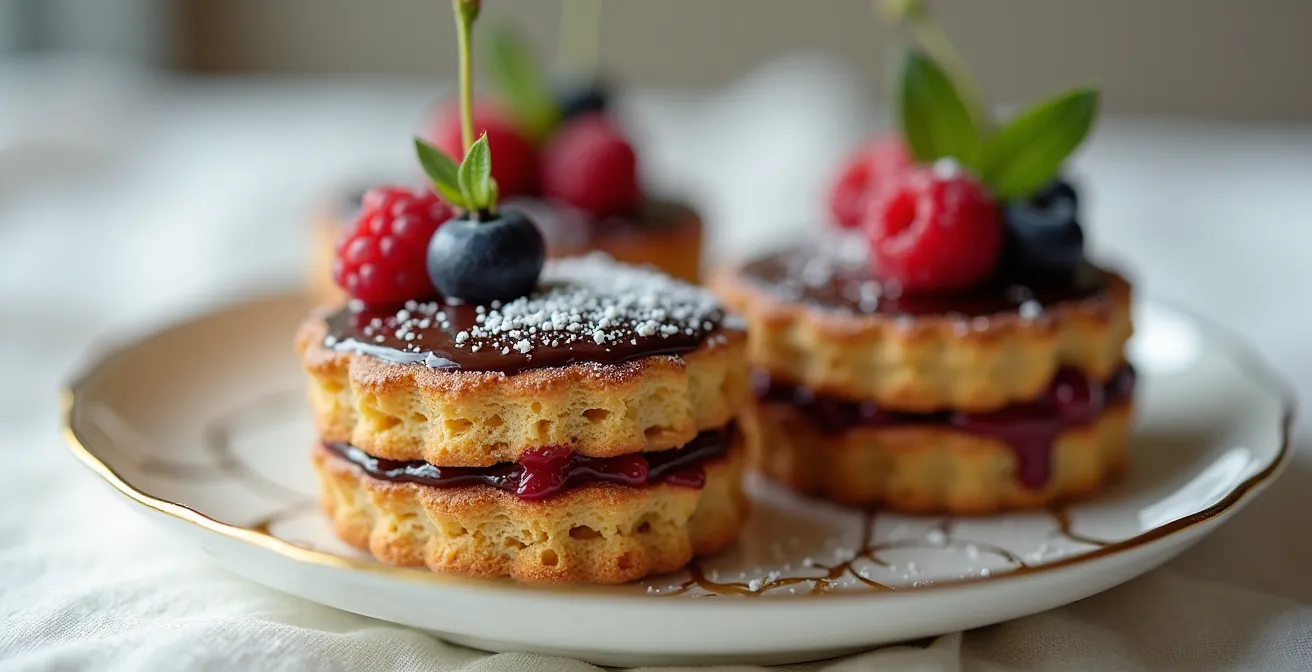
A well-balanced plate avoids palate fatigue and showcases your thoughtfulness as a host. For example, a sharp lemon tartlet prepares the way for a smooth chocolate pot de crème, which is then followed by the satisfying crunch and nutty depth of an almond financier. This intentional arrangement demonstrates a deep understanding of palate architecture. The table below, inspired by professional pairing strategies, offers a clear guide to orchestrating your pastry selection.
| Profile Type | Examples | Pairing Strategy |
|---|---|---|
| Bright/Acidic | Lemon tartlet, passion fruit curd | Position first to awaken palate |
| Rich/Creamy | Chocolate pot de crème, cheesecake | Serve in middle for contrast |
| Textured/Nutty | Hazelnut dacquoise, almond financier | End with complex textures |
Earl Grey or Darjeeling: Which Tea Cuts Through Rich Cream Puffs?
The pairing of tea with pastries is the final touch in your sensory blueprint, and the principle is one of contrast, not just complement. While cream puffs are delightfully rich with their unctuous filling, they require a beverage with enough character to cleanse the palate and prepare it for the next bite. This is where the specific characteristics of your tea selection become crucial.
For a rich, creamy pastry like a cream puff or a dense slice of cheesecake, you need a tea with either bright acidity or a pleasant astringency from tannins. Earl Grey, with its signature citrusy notes from bergamot oil, is a classic choice. As the experts at Whittard demonstrate when pairing their Earl Grey with lemon tarts, the citrus aroma provides a brilliant lift that cuts through sweetness and fat. This same logic applies perfectly to the richness of pastry cream.
Alternatively, a high-quality Darjeeling, often called the “champagne of teas,” offers a different but equally effective solution. Its muscatel notes and delicate astringency act as a natural palate cleanser, refreshing the mouth without overpowering the dessert. The key is to avoid a tea that is too milky or mild, as it would simply get lost. You are looking for a tea that can stand its ground and provide a refreshing counterpoint, making each bite of the rich pastry feel like the first.
How Many Pastries Per Person for a 2-Hour Tea Event?
One of the most common anxieties for any host is portioning. Too little food signals a lack of generosity, while too much can feel wasteful and overwhelming. The key to elegant portioning is precision, calculated against the event’s duration and the typical progression of an afternoon tea service. It is a known industry standard that a traditional afternoon tea typically lasts two hours, a timeframe that dictates a surprisingly generous but structured allocation.
For a two-hour event, the professional standard is a balanced and substantial offering per guest. You should plan for a total of 9 to 10 individual items per person, broken down as follows:
- 4 finger sandwiches: This is the savory foundation. Offering four different flavors keeps this course interesting.
- 2 scones: Traditionally, this includes one plain and one fruit scone, served with clotted cream and preserves.
- 3-4 mini pastries: This is the final, sweet flourish where your balanced trio comes into play.
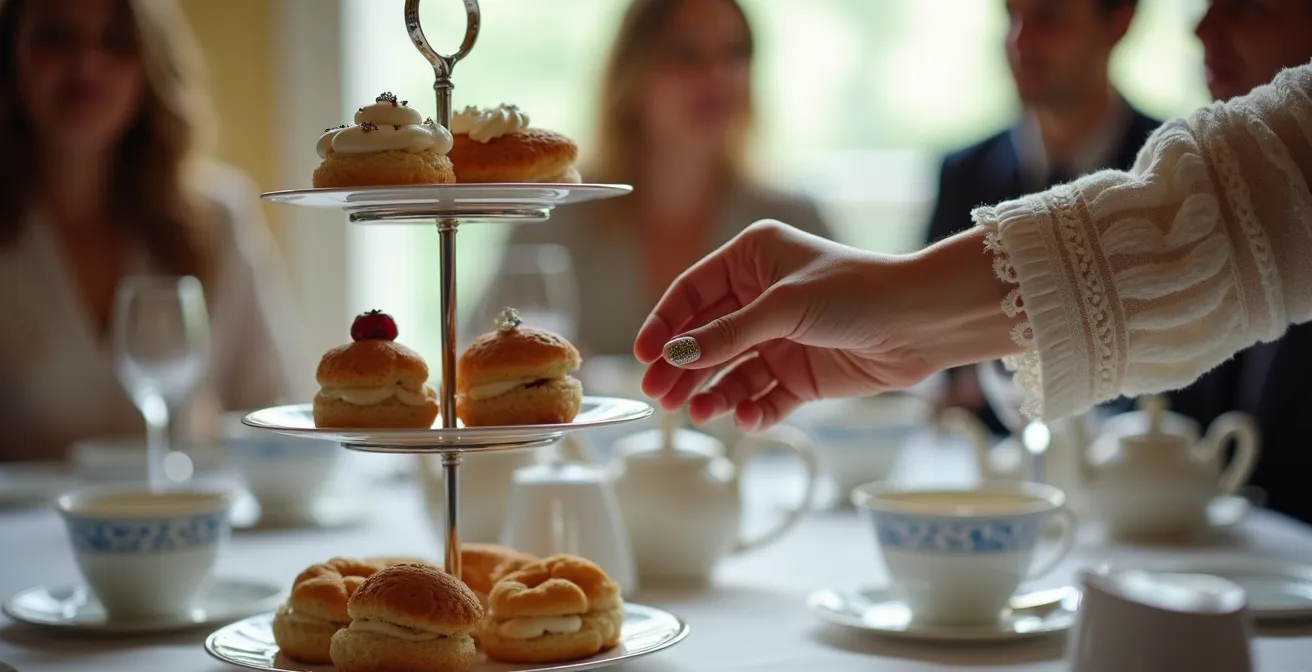
This structure is designed to be consumed in waves, starting with savory and progressing to sweet, preventing any single course from feeling too heavy. It’s also wise to include a 15% buffer, especially for items that freeze well, such as scones or certain cake bases. This allows you to accommodate heartier appetites without stress. A tiered stand not only presents the food beautifully but also visually guides guests through the proper portioning.
What Can Be Baked 24 Hours Before Your Tea Party?
The secret to a calm and composed host on the day of an event is a robust make-ahead strategy. An afternoon tea, with its many components, is perfectly suited for this approach. Your goal is to minimize day-of tasks to assembly and final touches only. A detailed 72-hour timeline is your greatest asset, turning a daunting task into a series of manageable steps.
Many components not only survive but actually benefit from being made in advance. According to a make-ahead strategy from the professionals at Flower & Sugar, cakes and cupcakes can be baked and frozen un-iced for up to a month. Scones also freeze exceptionally well, allowing you to build a stock weeks in advance. This completely removes the pressure of baking from scratch on the day of the party.
The 24-hour mark is for crucial sub-assemblies. This is when you should be making your sandwich fillings, preparing pastry cream, and baking scones from frozen. This leaves only the most delicate tasks for the day of the event: assembling sandwiches on fresh bread, frosting cakes, and warming the scones just before serving. Following a structured timeline is the ultimate expression of organization.
Your 72-Hour Hosting Timeline
- 72 hours before: Shop for all ingredients. Prepare and freeze scone dough. Make and bake tart shells and store them in an airtight container.
- 48 hours before: Bake cakes or cupcakes and store them, unfrosted. Prepare frangipane fillings. Create any other stable pastry components like curds or mousses.
- 24 hours before: Make all sandwich fillings and store them covered in the refrigerator. Thaw cakes. Bake scones from frozen and store them once cool. Prepare pastry cream.
- Day of event (morning): Assemble sandwiches. Frost cakes and cupcakes. Fill tarts and assemble all final pastries. Arrange your garnish station.
- Just before serving: Arrange food on tiered stands. Gently warm scones. Add final fresh garnishes (flowers, herbs) to pastries and cakes.
Almond and Pear: Why This Frangipane Combo is a timeless Classic?
Some flavor combinations are so perfect they achieve timeless status, reappearing on patisserie menus generation after generation. The pairing of soft, juicy pear with rich, nutty almond frangipane is one such classic. Its endurance is not an accident but a result of deep historical roots and a perfect harmony of flavor and texture. The history of frangipane itself can be traced back to the 16th Century as an Italian invention, but its marriage to pear was perfected in 19th-century Paris.
This iconic pairing is epitomized by the Tarte Bourdaloue. This dessert is a masterclass in balance: the sweet, yielding texture of poached pears cuts through the dense, rich almond cream, which itself is encased in a crisp, buttery pastry shell (pâte sucrée). Each component mitigates and elevates the others. The moisture of the pear prevents the frangipane from being dry, while the nutty depth of the almond keeps the fruit from tasting one-dimensionally sweet.
The historical significance of this tart lends it an air of sophistication that is perfect for a refined afternoon tea. As the definitive French culinary encyclopedia, Larousse Gastronomique, notes, the tart was invented by a Parisian pastry chef and holds a distinguished place in the canon of French patisserie.
Bourdaloue is a tart invented by a pastry chef in Paris’s Rue Bourdaloue during la Belle Epoque – composed of poached Pear Williams, drowned in a vanilla frangipane cream.
– Larousse Gastronomique, French Culinary Encyclopedia
Including a classic like this in your menu is a nod to tradition and shows a deep appreciation for the history of pastry arts. It tells your guests that you value not just taste, but also story and heritage.
Pitcher Cocktails: How to Prep Welcome Drinks Before Guests Arrive?
The moment your guests arrive sets the tone for the entire event. A gracefully offered, perfectly chilled welcome drink signals that they are in the hands of a capable and thoughtful host. Pitcher cocktails are the ideal solution for serving a crowd without being trapped behind a bar. The key, as with your food preparation, is a strategic, batched approach that allows for effortless service.
The most elegant pitcher cocktails for an afternoon tea often incorporate the theme itself. Infusing spirits like gin with Earl Grey or chamomile tea leaves 24 hours in advance adds a layer of complexity and a beautiful aromatic quality. This infused spirit then becomes the base of your cocktail.
Your preparation should be done in stages to preserve the freshness and vibrancy of the drink. The day before, you can create a concentrated base by mixing your infused spirits, any syrups, and citrus juices. This mixture should be refrigerated in the pitcher. Crucially, any carbonated elements—like prosecco, tonic, or soda water—must be kept separate and chilled. You will add this fizz to each glass just before serving, ensuring a lively, sparkling drink. Setting up a small garnish station with citrus wheels, fresh herbs, or edible flowers allows for a beautiful final flourish with zero last-minute stress.
Do not discard the byproducts of your other preparations. As one host cleverly demonstrated, leftover syrup from poaching pears can be transformed into a sophisticated cocktail base. They noted, “My fabulous husband made a wicked cocktail with the syrup, vodka, orange juice and a touch of pear brandy.” This is the pinnacle of elegant resourcefulness.
Key Takeaways
- The temperature of your butter is not a suggestion; it is the single most important factor determining the final texture of your scones and pastries.
- A balanced pastry offering follows a “sensory blueprint,” guiding the palate from light and acidic flavors to rich and complex ones.
- A detailed 72-hour timeline is a host’s most powerful tool, transforming a complex event into a series of calm, manageable tasks.
How to Coordinate a 3-Course Celebration Dinner for 10 People Without Spending All Day in the Kitchen?
The principles of orchestration you master while planning a sophisticated afternoon tea are not limited to that single event. They are, in fact, the foundational skills for all successful hosting, scalable to even more complex gatherings like a three-course dinner party for ten. The goal remains the same: to be a present and gracious host, not a frantic cook. The key is to apply the same logic of strategic planning and timing.
First, create a master timeline, working backward from the moment you want to sit down for dinner. Your menu should be designed with “mise en place” in mind. Select dishes where components can be prepared hours, or even a day, in advance. A cold appetizer or a soup that simply needs reheating is a perfect start. For your main course, choose a protein that can be slow-roasted or braised, requiring minimal active cooking time. Side dishes like vegetable gratins or grain salads can be fully assembled ahead and baked or finished just before serving.
The concept of “pastry cadence” from your tea party evolves into “course flow.” Ensure your menu has a logical progression of flavors. A light, acidic starter prepares the palate for a richer main, which is then complemented by a dessert that offers a different textural or flavor experience. By front-loading the work—chopping all vegetables, making all sauces, and setting the table the morning of—you free yourself to manage the final, crucial 30 minutes of cooking and assembly with calm and control. This allows you to serve a stunning, multi-course meal while still having the energy to enjoy your own party.
By shifting your perspective from following recipes to orchestrating an experience, you can host with confidence and grace. Begin today by creating your master timeline, and you will be well on your way to hosting an unforgettable event that is as enjoyable for you as it is for your guests.