Holiday Recipes
Holiday cooking represents one of the most rewarding yet challenging culinary undertakings. Unlike everyday meals, holiday feasts demand orchestrating multiple dishes simultaneously, accommodating diverse dietary needs, and creating memorable presentations—all while maintaining your composure. The difference between a stressful scramble and an elegant celebration often comes down to understanding the fundamental principles of timing, temperature control, and strategic planning.
This comprehensive resource breaks down the essential components of successful holiday cooking. Whether you’re preparing your first Thanksgiving dinner or refining techniques for annual celebrations, mastering these core concepts will transform how you approach large-scale meal preparation. From backward planning your cooking timeline to ensuring every dish arrives at the table at the perfect temperature, these foundational strategies apply across all holiday traditions and feast occasions.
How Should You Plan a Holiday Feast?
The foundation of stress-free holiday cooking begins days—sometimes weeks—before guests arrive. Backward planning is the professional chef’s secret: start with your desired serving time and work backwards, calculating when each component must begin cooking, prepping, or even shopping.
Creating Your Timeline
Consider a typical holiday dinner served at 3 PM. Your main roast might require three hours of cooking plus thirty minutes of resting. This means it must enter the oven by 11:30 AM at the latest. Side dishes that need oven space must be scheduled around this anchor point. Think of your timeline as a Gantt chart where each task has dependencies—the gravy cannot start until the roast releases its drippings, but your vegetables can be prepped the night before.
Managing Dietary Restrictions
Modern holiday gatherings typically include guests with varying dietary needs. Rather than viewing these as obstacles, consider them opportunities for creative menu expansion. A well-planned vegetarian centerpiece—such as a stuffed squash or elegant mushroom wellington—serves double duty, providing an impressive option for plant-based eaters while adding visual variety to your spread. The key is integrating these dishes into your main menu rather than treating them as afterthoughts.
Logistics for Large Groups
Feeding fifteen people requires different strategies than cooking for four. Calculate approximately six to eight ounces of protein per person, understanding that variety matters more than volume. Your oven, stovetop, and refrigerator space become precious real estate. Map out which dishes can be served at room temperature, which absolutely require heat, and which can be prepared entirely in advance.
Mastering the Centerpiece Roast
The holiday roast—whether turkey, beef, lamb, or pork—commands both literal and symbolic center stage. Understanding the science behind perfect roasting elevates your results from adequate to exceptional.
The Weekly Roast Tradition
In many households, the Sunday roast provided weekly practice for holiday techniques. This tradition taught important lessons: consistent oven temperature, proper seasoning timing, and the relationship between meat size and cooking duration. A three-pound roast behaves very differently than a fifteen-pound turkey, requiring adjusted techniques rather than simple time multiplication.
Why Resting Meat Is Non-Negotiable
Resting meat after roasting isn’t optional—it’s chemistry. When meat cooks, muscle fibers contract and push moisture toward the center. Cutting immediately releases this juice onto your cutting board instead of keeping it in the meat. A proper rest period (typically 15-30 minutes for roasts) allows fibers to relax and reabsorb moisture evenly. Use this time productively for gravy-making and final dish preparations.
Transforming Drippings Into Gravy
Pan drippings contain concentrated flavors that no store-bought stock can replicate. The classic gravy technique—creating a roux with fat and flour, then whisking in liquid—becomes intuitive with practice. The drippings provide both fat and fond (those browned bits stuck to the pan). Deglazing with wine or stock lifts these flavor compounds, creating the foundation for rich, complex gravy that ties your entire meal together.
Timing and Temperature: The Critical Balance
Holiday cooking’s greatest challenge lies in synchronizing multiple dishes with different cooking requirements to finish simultaneously. Professional kitchens use timing systems and holding techniques that home cooks can easily adapt.
Vegetable Timing Synchronization
Root vegetables require forty-five minutes of roasting, while delicate green beans need barely eight minutes of blanching. Brussels sprouts hit their sweet spot at twenty-five minutes. Rather than starting everything simultaneously, work backwards from your serving time. Create a simple schedule: “2:45 PM – Start green beans, 2:30 PM – Brussels sprouts in oven, 2:15 PM – Begin reheating make-ahead dishes.” This sequential approach prevents stovetop congestion and ensures each vegetable reaches its ideal doneness.
Warming Drawer Hacks
A warming drawer maintains food at safe serving temperatures (typically 140-200°F) without continuing to cook it. If you lack a dedicated warming drawer, your oven set to its lowest temperature (usually 170-200°F) with the door slightly ajar serves the same purpose. This technique keeps early-finishing dishes like stuffing or casseroles hot while you complete final preparations. Cover dishes loosely with foil to prevent drying.
Temperature Retention on Large Dishes
Large-format serving dishes—particularly ceramic or cast iron—act as thermal batteries. Preheat your serving platters in a low oven for ten minutes before plating. This simple step keeps food warmer significantly longer, especially important when serving family-style. Conversely, cold dishes like salads benefit from chilled plates kept in the refrigerator.
Creating Visual Impact and Presentation
Holiday meals engage all senses, with visual presentation setting expectations before the first bite. Professional presentation techniques require no special skills—just intentional planning.
The Art of Garnishing for Contrast
Effective garnishing follows a simple principle: contrast creates visual interest. Dark roasted meats benefit from bright green herb sprigs or vibrant cranberry clusters. Pale mashed potatoes gain appeal with a sprinkle of fresh chives or paprika. The garnish should be edible and relate to the dish—lemon wedges on fish, fresh thyme on roasted vegetables. Avoid non-edible decorations that clutter the plate without adding value.
Carving Strategy for Presentation
Carving at the table creates theater but requires confidence. The alternative—pre-carving in the kitchen—offers control and even portions. For impressive presentation, partially carve the roast, then reconstruct its shape on the platter with slices slightly fanned. This technique, called “reformed carving,” provides visual impact while making service effortless. Include a small dish of extra jus or gravy on the platter for moisture and shine.
Table Setting Logistics
Your table layout directly impacts serving efficiency. Family-style service requires strategic dish placement—heavy items like the main roast near the host who’ll serve it, lighter dishes within easy reach of all diners. Buffet-style arrangements should flow logically: plates first, then proteins, followed by sides, with utensils and napkins last. This cafeteria-line logic prevents bottlenecks and keeps guests moving smoothly.
Smart Preparation Strategies
Efficiency in holiday cooking comes from identifying which tasks can be completed in advance without sacrificing quality. The professional kitchen concept of mise en place—everything in its place—applies beautifully to home holiday preparation.
Pre-Batching Drinks
Beverage service often gets overlooked in planning, leading to constant interruptions. Pre-batch cocktails, punch, or even wine service by setting up a self-serve station. A large-format punch can be prepared hours ahead, with ice added just before service to prevent dilution. For wine service, open bottles thirty minutes early and arrange them accessibly. Calculate approximately half a bottle per guest for events lasting several hours, adjusting for your specific crowd.
Integrating Vegetarian Centerpieces
Beyond accommodating dietary needs, vegetarian centerpieces add color and variety to your spread. A stuffed acorn squash, elegant tart, or layered vegetable terrine can be largely assembled the day before, requiring only final baking or reheating. These dishes often hold temperature better than delicate proteins, making them ideal candidates for early preparation.
Timing the Transfer to Platters
The final ten minutes before serving sees the most chaos. Minimize stress by transferring cold and room-temperature items to serving dishes first. Hot items should move to preheated platters at the last possible moment. This staged approach spreads the workload and ensures nothing sits too long before service.
Beyond the Feast: Leftover Logic
A successful holiday meal generates planned leftovers—arguably as anticipated as the meal itself. Strategic leftover planning begins with your initial shopping and cooking.
The legendary leftover sandwich relies on texture contrast and flavor layering. Think beyond simple meat-and-bread combinations. The best versions incorporate multiple textures: crispy elements (perhaps that extra stuffing, crisped in a pan), creamy components (cranberry sauce or a smear of mashed potato), and fresh accents (lettuce or arugula for contrast). Gravy serves as the “special sauce” that unifies disparate elements. Some cooks intentionally prepare extra Yorkshire puddings or rolls specifically for next-day sandwich construction.
Consider portioning and storing leftovers strategically. Separate components maintain their individual qualities better than mixed plates. Label containers with dates, and plan specific leftover meals within the first three days when quality remains highest. Turkey soup, shepherd’s pie topped with leftover mashed potatoes, and vegetable frittatas give leftovers new life beyond simple reheating.
Holiday cooking mastery develops through practice and reflection. After each feast, note what worked well and what you’d adjust. These insights transform into your personal playbook, making each subsequent celebration smoother and more enjoyable. The goal isn’t perfection but creating meaningful moments around food—moments that begin with solid technique and thoughtful planning.
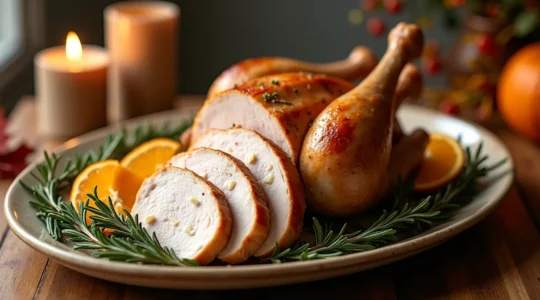
How to Assemble a Thanksgiving Platter That Stays Hot and Looks Professional?
The secret to a flawless Thanksgiving meal is to stop thinking like a home cook and start orchestrating like a banquet manager, focusing on thermal management and workflow over just recipes. Effective heat retention relies on science: using pre-warmed ceramic…
Read more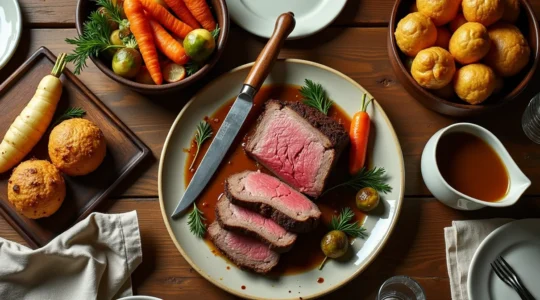
The Secret to Juicy Sunday Roasts That 90% of Home Cooks Ignore
The secret to a magnificent roast isn’t a complex recipe, but the simple, non-negotiable science of resting the meat properly. Cutting a roast too soon forces out up to 40% of its natural juices, guaranteeing a dry result. True, deep…
Read more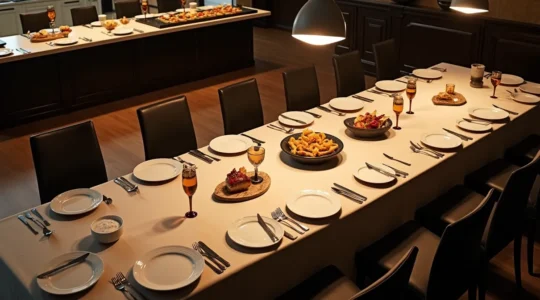
How to Host a 3-Course Dinner for 10 Without Spending All Day in the Kitchen
In summary: Adopt a professional caterer’s mindset: focus on “workflow over recipes” by organizing your kitchen into stations. Create a reverse timeline (a “T-Minus” schedule) starting from your desired serving time to map out every task. Master temperature integrity by…
Read more