Healthy Recipes
Healthy cooking isn’t about restriction or bland meals—it’s about understanding how to maximize nutrition while creating dishes that genuinely satisfy. Whether you’re feeding a family on a budget, managing dietary restrictions, or simply seeking to improve your overall wellness, the foundation lies in mastering practical techniques and making informed ingredient choices. The challenge many home cooks face isn’t lack of desire to eat healthily, but rather the gap between nutritional goals and the realities of time, taste preferences, and cooking confidence.
This comprehensive resource connects the essential elements of healthy cooking: from strategic meal planning and budget management to nutrient preservation techniques, flavor enhancement without excess fat or sugar, and functional nutrition for specific wellness goals. You’ll discover how small shifts in preparation methods can dramatically impact both nutritional value and taste, why certain cooking techniques protect vitamins while others destroy them, and how to navigate the often-confusing world of clean ingredients and dietary substitutions.
Planning and Preparation: The Foundation of Sustainable Healthy Eating
The most nutritious recipe in the world becomes irrelevant if it never makes it to your table. Strategic meal planning forms the cornerstone of consistent healthy eating, particularly for busy households where convenience often trumps nutrition. The hidden costs of convenience foods extend far beyond the price tag—they include excess sodium (often exceeding 40% of daily recommendations in a single meal), inflammatory oils, and the opportunity cost of missing out on nutrient-dense whole foods.
Batch cooking methodology transforms weeknight dinners from stressful decisions into simple assembly tasks. By dedicating two to three hours on a weekend to prepare base components—roasted vegetables, cooked grains, marinated proteins, and homemade stocks—you create a personal “convenience food” system without the nutritional compromises. This approach typically reduces weekly cooking time by 60-70% while cutting food costs by preparing ingredients when they’re at peak freshness and best pricing.
For households with picky eaters, the rotation strategy works remarkably well: rather than preparing entirely separate meals, create a base dish with deconstructed components. A taco night becomes a customizable bar; a grain bowl offers choices in toppings. This method respects individual preferences while maintaining nutritional standards. Additionally, mastering the art of repurposing leftovers safely—understanding proper cooling techniques, storage temperatures below 40°F (4°C), and creative flavor transformations—prevents both food waste and the temptation to order takeout when the refrigerator seems empty.
Mastering Cooking Techniques for Maximum Nutrient Retention
How you cook matters as much as what you cook. Certain preparation methods can destroy up to 50% of water-soluble vitamins like vitamin C and B vitamins, while others preserve and even enhance nutrient bioavailability. Understanding these techniques empowers you to make informed decisions based on your specific ingredients and nutritional goals.
Gentle Heat Methods for Delicate Proteins
Cooking low-fat meats and fish without drying them out requires temperature control and timing precision. Poaching maintains moisture by surrounding protein with liquid heated to 160-180°F (70-82°C)—well below the boiling point. Brining techniques, which involve soaking proteins in a salt-water solution, restructure muscle fibers to retain up to 30% more moisture during cooking. For plant-based proteins like tofu or tempeh, marinating serves a dual purpose: infusing flavor while creating a protective barrier against excessive moisture loss. The often-overlooked step of proper resting time allows juices to redistribute throughout the protein, preventing that disappointing puddle on the cutting board.
Preserving Vitamins and Minerals
Fermentation for gut health doesn’t just preserve food—it actually increases certain B vitamins and enhances mineral bioavailability by reducing anti-nutrients like phytic acid. Quick-cooking methods like steaming or stir-frying preserve more nutrients than prolonged boiling, which leaches vitamins into discarded cooking water. When making smoothies, understanding pairing logic matters: combining iron-rich greens with vitamin C sources like citrus enhances iron absorption by up to 300%. Storage practices also impact nutrition—keeping cut vegetables in airtight containers and using them within three days maximizes vitamin retention, as many nutrients degrade when exposed to oxygen.
Creating Satisfaction Without Nutritional Compromise
The psychology of healthy eating often stumbles on the perception of deprivation. Bridging the gap between nutrition and indulgence requires understanding the science of satisfaction—what makes food feel rich, comforting, and craveable without excess calories, saturated fat, or refined sugar.
Flavor Enhancement Strategies
Boosting satiety with umami-rich ingredients—mushrooms, tomatoes, aged cheeses, miso, and nutritional yeast—creates the savory depth typically associated with high-fat cooking. Umami triggers the same satisfaction receptors as rich, fatty foods, which explains why a well-made mushroom broth can feel as satisfying as one made with beef bones. Strategic herb and spice utilization transforms bland “diet food” into genuinely exciting meals: smoked paprika provides depth, fresh herbs add brightness, and warming spices like cinnamon can reduce the perceived need for added sugar by up to 25%.
Texture Without Excess Fat
Achieving creamy textures without heavy cream involves understanding fat alternatives and emulsification techniques. Blended white beans, soaked cashews, or cauliflower purée can create luxurious sauces with a fraction of the saturated fat. The psychology of mindful eating plays a crucial role here—eating slowly and focusing on texture, temperature, and flavor complexity naturally leads to greater satisfaction with smaller portions. Fat reduction techniques don’t mean fat elimination; rather, they involve strategic placement of high-quality fats where they’ll have maximum impact on both flavor and satiety.
Healthy Treats and Desserts
Creating healthy refreshing options without baking opens up possibilities for satisfying treats that don’t require added sugar or processed ingredients. Understanding fruit sorbet texture science reveals that the natural pectin in fruits, combined with proper freezing techniques, creates smooth, creamy results without dairy or eggs. Yogurt bark stability depends on the fat content of your yogurt and the ratio of toppings—Greek yogurt with 2% fat provides better structural integrity than non-fat versions. Proper serving temperature optimization makes a significant difference: allowing frozen desserts to temper for 5-7 minutes at room temperature dramatically improves perceived creaminess and flavor intensity.
Navigating Dietary Restrictions and Allergy-Friendly Cooking
Mastering texture in allergy-friendly cooking presents unique challenges, as many common allergens—eggs, dairy, wheat, nuts—serve structural or textural roles beyond simple nutrition. Success requires understanding both the function of the original ingredient and the properties of potential substitutes.
Binding agents for baking without eggs include ground flaxseed (which creates gel-like bonds when mixed with water), chia seeds, or commercial egg replacers based on potato or tapioca starch. Each works differently: flax adds a nutty flavor suitable for hearty breads, while starch-based replacers remain neutral in delicate cakes. Flour blend ratios for gluten-free baking typically combine three elements: a whole grain flour for nutrition (brown rice, oat), a starch for texture (potato, tapioca), and a binder (xanthan gum). The standard ratio of 70% grain flour to 30% starch produces results closest to traditional wheat-based baking.
Cross-contamination risks require vigilance beyond ingredient selection—dedicated cutting boards, thorough equipment washing, and understanding that even trace amounts (as little as 1/8 teaspoon) of an allergen can trigger reactions in sensitive individuals. Practical steps include rinsing quinoa correctly to remove its natural saponin coating (which can cause digestive issues) and flavor masking for strong grains like buckwheat or teff by pairing them with aromatic spices or sweet elements.
Building a Clean, Functional Kitchen Foundation
Detoxifying the pantry and cooking process begins with understanding what truly poses health risks versus marketing-driven fear. The priority hierarchy should focus on eliminating inflammatory oils (partially hydrogenated oils containing trans fats) and replacing them with stable options like olive oil, avocado oil, or coconut oil depending on cooking temperature requirements.
Decoding Ingredients and Equipment
Deciphering ingredient labels requires knowing which terms indicate added sugars (over 60 names exist, including “evaporated cane juice” and “rice syrup”), artificial additives, and inflammatory preservatives. A simple rule: ingredients should be recognizable foods, not chemical compounds requiring a degree to pronounce. Natural sweetener alternatives like dates, pure maple syrup, or raw honey provide sweetness with trace minerals and lower glycemic impact compared to refined sugar, though they should still be used mindfully.
Selecting non-toxic cookware matters more than many realize. Non-stick coatings containing PFOA can release harmful compounds at high heat, making ceramic, stainless steel, or cast iron safer choices for most applications. Homemade stock basics not only provide superior flavor and nutrition compared to store-bought versions but also eliminate concerns about MSG, excess sodium, and questionable preservatives. A basic stock requires only bones or vegetable scraps, water, and time—active cooking involvement is minimal.
Functional Nutrition for Recovery, Energy, and Wellness
Moving beyond general “healthy eating,” functional nutrition targets specific wellness outcomes through strategic food choices and preparation methods. This approach recognizes that food serves as information for your cells, influencing inflammation levels, energy production, sleep quality, and metabolic health.
Anti-inflammatory spice usage leverages compounds like curcumin in turmeric, gingerol in ginger, and capsaicin in chili peppers to actively reduce inflammatory markers in the body. Pairing turmeric with black pepper increases curcumin absorption by 2,000% due to piperine’s effect on metabolism. Gut health maintenance through prebiotic-rich foods (garlic, onions, asparagus) and probiotic sources (fermented vegetables, yogurt) directly impacts immune function, mood regulation, and nutrient absorption.
Hydration through food often gets overlooked in favor of water consumption, yet foods with high water content—cucumbers, watermelon, celery, broths—contribute significantly to fluid balance while providing electrolytes. Blood sugar management relies on combining macronutrients strategically: pairing carbohydrates with protein, fat, or fiber slows glucose absorption and prevents energy crashes. Sleep-supporting foods rich in tryptophan, magnesium, and complex carbohydrates naturally support melatonin production when consumed in the evening hours.
The Social and Psychological Dimension
The social and psychological aspects of dieting frequently determine long-term success more than nutritional knowledge. Portion control works naturally when meals emphasize the satiety of healthy fats and fiber importance—these nutrients trigger fullness hormones and slow gastric emptying. A meal with adequate fat and fiber typically satisfies with 20-30% fewer calories than low-fat, low-fiber alternatives.
Understanding marketing versus reality protects against misleading health claims. “Natural” is an unregulated term; “organic” refers to farming practices, not nutritional superiority; “low-fat” often means higher sugar. Alcohol management in a healthy lifestyle doesn’t necessarily require elimination but does demand awareness of empty calories, blood sugar impacts, and effects on sleep quality and recovery. The key lies in informed, intentional choices rather than rigid rules that create psychological stress.
Healthy cooking represents a skill set that evolves with practice and knowledge. By focusing on practical planning strategies, nutrient-preserving techniques, and understanding the science behind satisfaction, you transform healthy eating from a temporary diet into a sustainable, enjoyable lifestyle. The recipes you create using these principles will nourish both body and spirit—proving that health and pleasure belong on the same plate.

Social Dieting: How to Eat Mediterranean at a Restaurant Without Breaking Your Diet?
Feeling anxious about restaurant menus is the main obstacle to social dieting, but the solution isn’t restriction—it’s strategy. Mastering physiological levers like satiety (through healthy fats and fiber) and flavor puts you in control of your meal. Learning to navigate…
Read more
Post-Workout Nutrition: What to Eat Within 30 Minutes to Maximize Muscle Recovery?
Maximizing post-workout recovery is not about a rigid 30-minute window, but about a strategic, multi-phase approach using biochemical synergy and precise physiological timing. Immediate post-workout nutrition should focus on easily digestible protein and carbohydrates to initiate muscle protein synthesis and…
Read more
Cauliflower Rice That Doesn’t Suck: Your Engineering Guide to Perfect Low-Carb Texture
The secret to delicious low-carb food isn’t the recipe, but mastering the science of texture. Learn to aggressively manage water content to prevent soggy vegetable substitutes and achieve a crisp, fluffy finish. Understand how to build stable emulsions and structural…
Read more
How to Cook Juicy Chicken Breast Without Adding Excess Fat
Perfectly juicy chicken breast isn’t about luck; it’s about controlling heat transfer and moisture at a cellular level. Techniques like brining and velveting chemically alter protein fibers to retain more water during cooking. Gentle cooking methods (cold-start, sous-vide) and proper…
Read more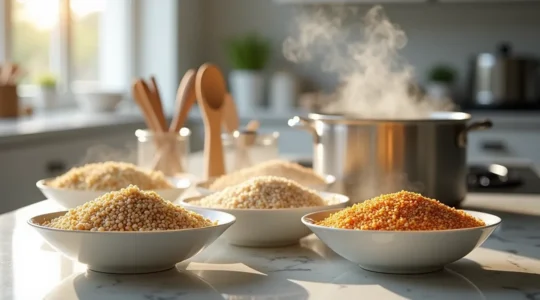
How to Cook Gluten-Free Grains That Are Fluffy Instead of Gummy?
In summary: The key to fluffy grains is not just water ratios, but removing natural coatings like saponins and controlling moisture through techniques like toasting. In baking, texture depends on understanding binders; xanthan gum provides structure but can turn slimy,…
Read more
Steaming vs. Boiling Kale: A Bio-Hacker’s Guide to Maximizing Nutrient Bioavailability
Contrary to popular belief, steaming is not universally the ‘best’ way to cook kale; the optimal method is a strategic choice dependent on your specific nutritional goal. Boiling is superior for reducing anti-nutrients like oxalates, thereby increasing the bioavailability of…
Read more
The 5 “Hidden” Additives in Your Pantry That Sabotage Clean Cooking
The real sources of toxins in your “clean” kitchen aren’t just obvious additives; they’re hiding in trusted staples, cookware, and cooking methods. “Natural flavors” can conceal dozens of synthetic chemicals, and high-sodium broths use flavor enhancers to mimic real taste….
Read more
How to Make Healthy Meals Taste Rich and Decadent Without Excess Fat?
In summary: True decadence in healthy food comes from mastering culinary science, not just swapping ingredients. Build deep, “meaty” flavor by strategically layering umami sources like browned tomato paste and dried mushrooms. Mimic the luxurious mouthfeel of fat by creating…
Read more
The Chef’s Guide to Refreshing Chilled Desserts Without Refined Sugar
In summary: The key to great sugar-free desserts isn’t just replacing sugar, but recreating its structural role in controlling texture and ice formation. Mastering freezing point depression with natural ingredients like fiber, alcohol, or small amounts of unrefined syrup is…
Read more
How to Plan Healthy Family Meals: A $150/Week System for a Family of 4
Feeding your family healthily on a tight budget isn’t about finding cheap recipes; it’s about implementing a zero-waste, decision-free food operating system. Transform single protein purchases into three distinct meals using the “protein cascading” method to eliminate waste. Reduce decision…
Read more