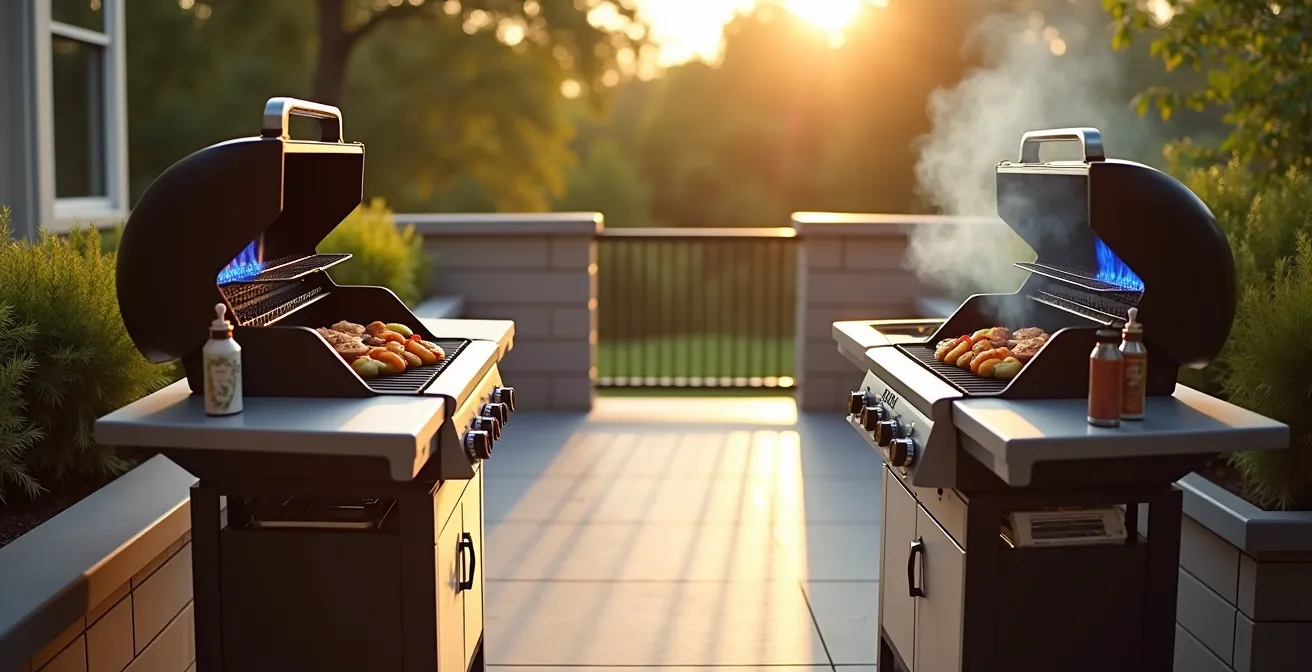
The great grill debate isn’t about gas convenience versus charcoal flavor; it’s about mastering universal techniques that work on any grill.
- True smoke flavor comes from controlling temperature and wood choice, not just the fuel source.
- Professional results depend on heat management (two-zone fires) and flavor layering, achievable in under an hour.
Recommendation: Focus on mastering heat control and timing—that’s the real key to unlocking amazing weeknight barbecue.
You stare out at the backyard on a Tuesday evening. You crave that deep, smoky, perfectly charred flavor of weekend barbecue, but the clock is ticking. The age-old debate immediately surfaces: fire up the gas grill for speed, or commit to the ritual of charcoal for superior taste? For years, you’ve been told it’s a trade-off. Convenience or flavor. Speed or soul. This is the common wisdom, the platitude repeated at every hardware store and family cookout.
But what if that’s the wrong question entirely? What if the secret to incredible weeknight grilling isn’t in the fuel you burn, but in the techniques you master? The truth is, a pitmaster can pull more flavor out of a gas grill than a novice can with the most expensive charcoal. The difference lies in understanding the science of heat and smoke. It’s about knowing how to create a real smoke ring, how to manage a flare-up without panicking, and when to apply your sauce so it glazes instead of burns.
This guide isn’t another generic pros-and-cons list. This is a playbook of fundamental, time-efficient techniques that deliver pitmaster-level results, regardless of what’s under your grates. We’re going to break down the science of flavor, the art of heat control, and the critical timing that separates amateur grilling from true outdoor cooking mastery. By focusing on method over machine, you’ll unlock that weekend flavor, any night of the week.
To help you navigate these core techniques, we’ve structured this guide to tackle the most critical questions and common mistakes. Each section builds upon the last, creating a complete framework for weeknight grilling success.
Table of Contents: A Pitmaster’s Guide to Weeknight Grilling Mastery
- Why Charcoal Grilling Provides a Smoke Ring That Gas Cannot Replicate?
- How to Extinguish Grease Fires Without Ruining Your Dinner?
- Direct vs Indirect Heat: The Setup for Grilling Whole Chicken
- The Cleaning Mistake That Rusts Your Cast Iron Grates in One Winter
- When to Apply BBQ Sauce to Prevent Burning the Sugars?
- Wet Brine vs Dry Brine: Which is Faster for Weeknight Pork Chops?
- Is a Handheld Smoking Gun Worth the Investment for Home Cocktails and Cheese?
- Wok Hei at Home: How to Achieve Smoky Flavor Without a Commercial Burner?
Why Charcoal Grilling Provides a Smoke Ring That Gas Cannot Replicate?
Let’s clear the smoke on this one. The coveted pink “smoke ring” on a piece of brisket or pork shoulder isn’t just a sign of smoke; it’s a specific chemical reaction. It’s the result of myoglobin in the meat binding with nitric oxide (NO) and carbon monoxide (CO) gases. These gases are abundant in the smoke from burning wood and charcoal. Gas grills, burning cleanly, produce very little of them. This is the fundamental reason charcoal has the edge in creating a true, deep smoke ring.
The reaction that “sets” the pink color only happens at lower temperatures. Once the surface of the meat gets too hot, the myoglobin breaks down and can no longer bind with the nitric oxide. The key window for this reaction to occur is while the meat’s surface temperature is below 140°F to 160°F. To maximize this effect, you must prolong this low-temperature phase, allowing as much NO as possible to penetrate the meat.
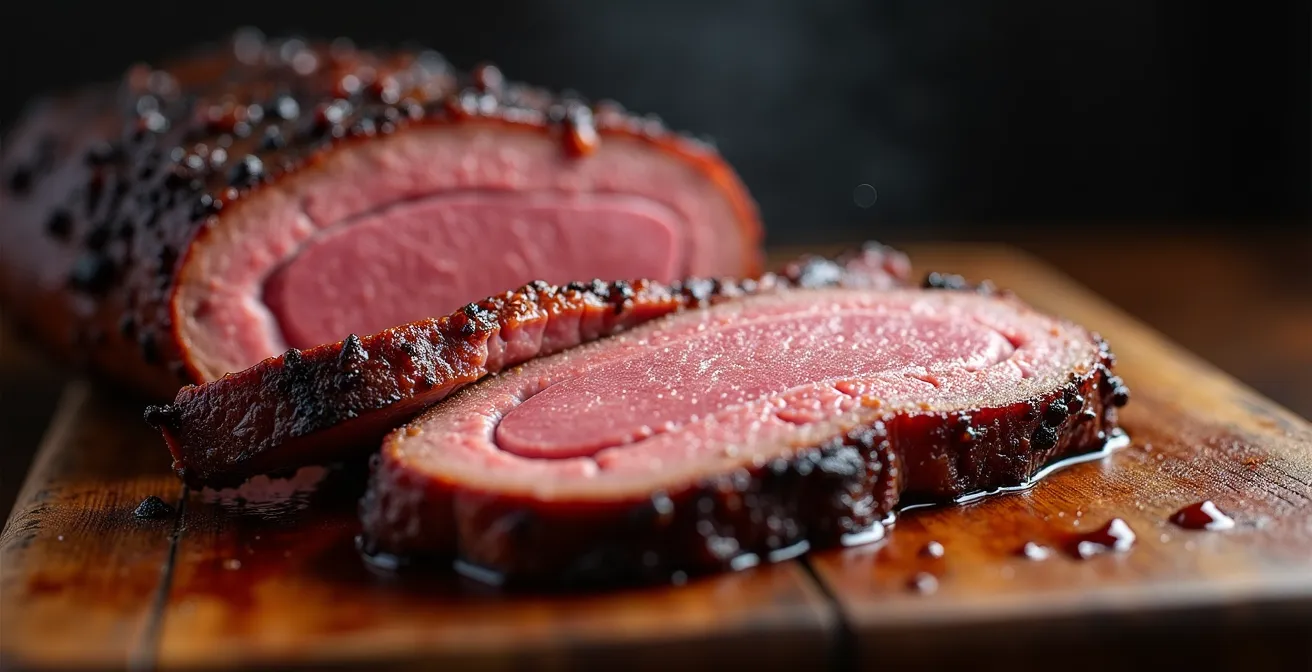
As you can see in a perfectly smoked piece of meat, that distinct ring is the visual proof of a successful low-and-slow start. While you can add smoke flavor with a gas grill using a smoker box, creating a deep, authentic ring is a challenge. To get the best possible smoke ring, even with charcoal, you need to control the environment from the very beginning. Here are the three most important steps:
- Start with cold meat straight from the refrigerator. This extends the time the meat surface stays below 140°F, giving the nitric oxide more time to bind with the myoglobin.
- Use dry wood chunks or charcoal briquettes, as they are known to produce higher nitric oxide levels compared to lump charcoal or gas combustion.
- Keep the initial cooking temperature below 300°F. This allows for more time for the crucial NO penetration before the myoglobin breaks down and the reaction stops.
How to Extinguish Grease Fires Without Ruining Your Dinner?
It’s a moment of pure panic: you turn away for a second and your beautiful steaks are engulfed in a roaring grease fire. The common instinct is to grab a spray bottle of water or slam the lid shut. Both are mistakes. Spraying water on a grease fire is not only ineffective but can make things worse. A respected authority in the grilling world, Meathead Goldwyn, puts it best.
Spraying water is counterproductive—it creates greasy, ashy steam that coats your food and can make the fire worse by splattering grease.
– Meathead Goldwyn, AmazingRibs.com Grilling Science Guide
Slamming the lid might starve a small fire of oxygen, but a significant grease fire has its own fuel source and can continue to smolder, producing a thick, acrid smoke that will ruin your dinner. The professional approach isn’t about extinguishing the fire with force; it’s about managing your heat zones. This is where having a two-zone fire—one side of the grill hot (direct heat) and the other with no or low heat (indirect heat)—is not just a technique, but a critical safety feature.
Case Study: The Two-Zone “Slide and Sear” Recovery
Professional pitmasters don’t panic; they have a plan. When a flare-up occurs over the direct heat zone, they use the ‘slide and sear’ recovery method. The food is immediately moved over to the cool, indirect zone of the grill. With the food removed from the fuel source, the flames from the grease drippings typically die down on their own within 15 to 30 seconds. Once the fire is out, the food is moved back to the direct heat to continue searing. This method prevents the food from becoming charred and bitter, doesn’t coat it in ashy steam, and allows the cooking process to continue with minimal interruption.
So, the next time a flare-up happens, don’t reach for water. Simply move your food to safety on the cool side of the grill, let the fire burn itself out, and then continue cooking. It’s the calm, controlled, and effective method that separates the pros from the amateurs.
Direct vs Indirect Heat: The Setup for Grilling Whole Chicken
If there is one technique that defines grilling mastery, it is the command of direct and indirect heat. Direct heat is cooking food right over the flame—great for searing steaks and burgers. Indirect heat is cooking food on the cooler side of the grill, with the heat circulating around it like an oven—perfect for larger or tougher cuts that need to cook through without burning. For a whole chicken, or even thick chicken breasts on a weeknight, using only direct heat is a recipe for disaster: a burnt exterior and a raw interior.
The solution is a method called the “reverse sear,” and it’s perfectly suited for a busy schedule. You start the chicken on the indirect side of the grill, letting it cook gently and evenly until it’s almost at its target internal temperature. This slow start keeps it incredibly moist. Then, you move it to the hot, direct-heat side for a few minutes to crisp up the skin and get that beautiful char. This method gives you the best of both worlds: perfectly cooked, juicy meat and a crispy, flavorful exterior. For boneless, skinless chicken breasts, this process is surprisingly fast, often taking only 20-25 minutes indirect followed by a 4-5 minute sear.
Understanding which method to use for different cuts and desired outcomes is key to consistent results. The following table breaks down the core cooking methods, their timing, and ideal applications, based on an analysis of different chicken cooking techniques.
| Method | Time | Temperature | Best For |
|---|---|---|---|
| Direct Only | 15-20 min | 450-500°F | Thin cuts, quick char |
| Indirect Only | 45-60 min | 350-375°F | Whole birds, even cooking |
| Reverse Sear | 30-35 min total | 225°F then 500°F | Thick breasts, crispy skin |
Setting up your grill for two-zone cooking from the start is non-negotiable. For a charcoal grill, bank all your hot coals to one side. For a two-burner gas grill, turn one burner on high and leave the other off. For a three-or-more-burner grill, light the outside burners and leave the middle one off. This simple setup gives you total control and is the foundation for almost every advanced grilling technique.
The Cleaning Mistake That Rusts Your Cast Iron Grates in One Winter
There’s nothing more heartbreaking than opening your grill after a long winter to find your prized cast iron grates covered in a layer of orange rust. The most common cause isn’t neglect, but a widespread misunderstanding of how to properly clean and maintain them. Many grillers, especially with gas grills, rely on the “burn-off” method—cranking the heat to high to incinerate leftover food. This is a fatal mistake for seasoned cast iron.
A seasoned cast iron grate has a protective, non-stick layer of polymerized oil baked onto its surface. Extreme heat doesn’t just burn off food; it strips this essential seasoning, leaving the raw iron exposed to moisture and oxygen—the two ingredients for rust. An experienced griller shared a hard-won lesson on this exact topic.
After 40 years of grilling, I learned the hard way that the ‘burn-off’ setting on gas grills actually strips seasoning faster than anything. Now I scrape my charcoal grates right before the next cook when they’re hot, and for gas, I do a gentle post-cook scrape followed by re-oiling while warm.
– Veteran Griller, TVWBB.com Forum
Proper care means protecting the seasoning at all costs. The best time to clean is when the grates are still warm, but not searingly hot. A stiff grill brush will remove debris without stripping the oil. After scraping, you must re-apply a thin layer of high-smoke-point oil (like canola or grapeseed oil) while the grates are still warm. This maintains the protective polymer layer and prepares the grill for its next use. For long-term storage, the process is even more critical.
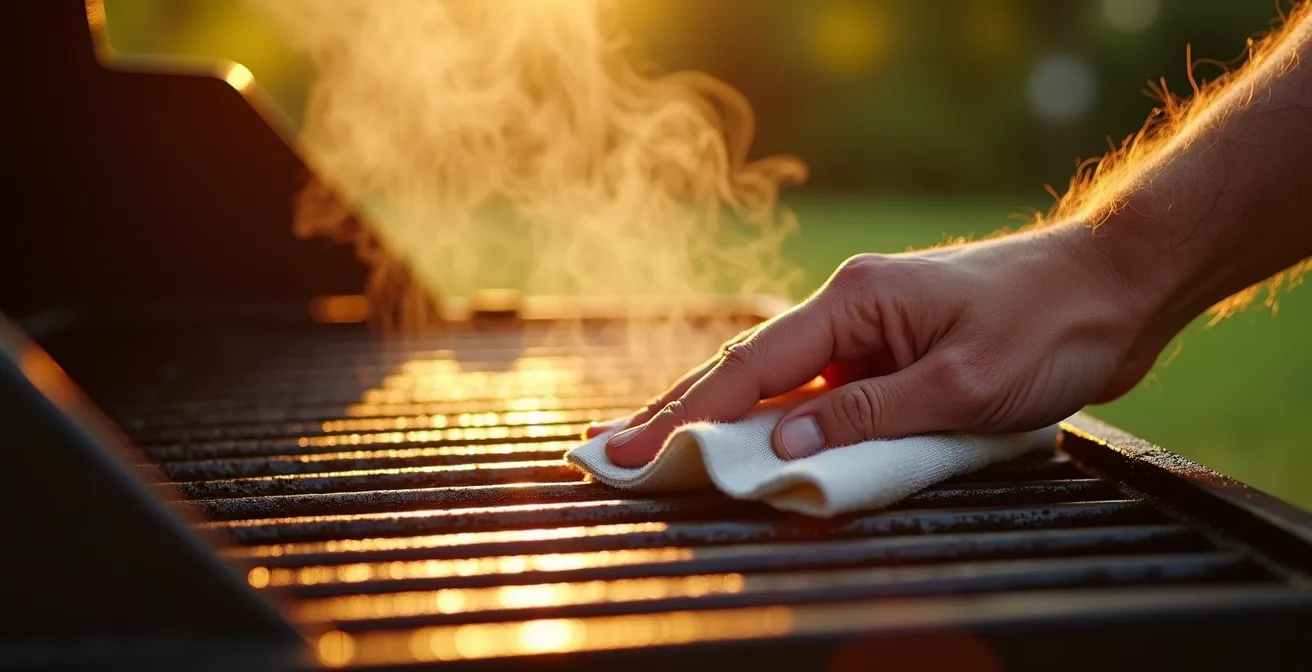
Your Action Plan: Deep Winter Storage for Cast Iron Grates
- Clean the grates thoroughly with a grill brush while they are still warm, but not blazing hot.
- Apply a very thin layer of a high-smoke-point cooking oil while the grates are still warm (around 200°F) to help the oil bond to the metal.
- For ultimate protection, complete a full re-seasoning cycle in your kitchen oven: bake the oiled grates at 450°F for one hour and let them cool in the oven.
- Wrap the completely cooled grates in butcher paper or several layers of newspaper to absorb any ambient moisture during storage.
- Store the wrapped grates in a dry location, like a garage or basement—never in a plastic bag or bin, which traps moisture and guarantees rust.
When to Apply BBQ Sauce to Prevent Burning the Sugars?
We’ve all been there: you brush on a thick, beautiful layer of your favorite BBQ sauce, only to have it turn into a black, bitter, carbonized mess within minutes. This isn’t a failure of your grilling skills; it’s a failure of timing, rooted in basic food chemistry. The culprit is sugar. Most BBQ sauces are loaded with sugar (in the form of molasses, honey, or corn syrup), and sugar burns at a much lower temperature than meat cooks.
The delicious browning on meat is the Maillard reaction, which happens at a wide range of temperatures. The burning of sugar, however, is a different process. Once sugar passes its caramelization point and heads toward the critical temperature of about 350°F (177°C), it quickly turns from sweet and complex to acrid and bitter. Applying a high-sugar sauce at the beginning of a cook, when your grill is at 400°F or higher, guarantees a burnt crust.
The secret is to treat your sauce as a finishing glaze, not a marinade. It should be applied only in the last 10-15 minutes of cooking, when the meat is almost done and you have likely reduced the grill’s heat. This gives the sauce just enough time to heat up, thicken, and form a perfect, sticky glaze without ever reaching its burning point. Competition pitmasters take this principle to another level with a multi-stage process.
Case Study: Professional Flavor Layering Technique
Competition teams build flavor in stages to avoid burning. They start with a dry rub, often one with little to no sugar, which is applied at the very beginning of the cook. This allows a savory crust (or “bark”) to form over several hours. Throughout the cooking process, they might use a thin, vinegar-based “mop” sauce to add moisture and a layer of tangy flavor. Only in the final 10-15 minutes of cooking, when the meat’s internal temperature is just 10-15°F away from its target and the grill has been moved to a lower or indirect heat, do they apply their high-sugar “glaze.” They often apply several thin coats, letting each one set for a few minutes, to build a perfect, shiny, and non-burnt finish.
For a weeknight cook, you can simplify this: use your dry rub at the start, and wait until the very end to brush on your sauce. Move the food to the indirect heat zone before saucing to be extra safe.
Wet Brine vs Dry Brine: Which is Faster for Weeknight Pork Chops?
Brining is a game-changer for lean cuts like pork chops or chicken breasts, which can easily dry out on the grill. The process ensures a juicy, flavorful result every time. The debate then becomes: wet brine or dry brine? A traditional wet brine involves soaking the meat in a saltwater solution. A dry brine involves simply rubbing the meat with salt (and other seasonings) and letting it rest. For a busy weeknight, the answer is clear: dry brining is faster, cleaner, and more effective.
A wet brine works by having the meat absorb water through osmosis. While this adds moisture, it also dilutes the natural flavor of the meat. It requires a large container, a significant amount of fridge space, and dealing with sloshing, contaminated salt water afterward. It’s a messy, time-consuming process.
A dry brine, on the other hand, works differently. The salt on the surface draws moisture out of the pork chop. This moisture dissolves the salt, creating a super-concentrated brine that is then reabsorbed back into the meat. This process breaks down muscle proteins, allowing them to retain more of their own natural moisture during cooking. The result is a chop that is just as juicy, but with a more intense, concentrated pork flavor. Crucially, a dry brine also leaves the surface of the meat much drier than a wet brine, which is essential for achieving a perfect, crisp sear on the grill. For a thick-cut pork chop, a dry brine can work its magic in as little as 45 minutes to an hour on a wire rack in the fridge—just enough time to prep your other ingredients.
Is a Handheld Smoking Gun Worth the Investment for Home Cocktails and Cheese?
In the quest for smoke flavor, you’ll inevitably come across the handheld smoking gun. This gadget lets you inject a plume of cool smoke into a covered container, infusing anything from a block of cheddar to a glass of whiskey in minutes. The question is, is it a serious cooking tool or just a novelty? From a pitmaster’s perspective, it’s a bit of both, but it’s crucial to understand its purpose: it is a finishing tool, not a cooking tool.
A smoking gun is fantastic for what it does. It imparts a delicate, aromatic, surface-level smoke flavor to foods that are already cooked or don’t require cooking. For a smoky Old Fashioned, a quickly-smoked block of cheese for a charcuterie board, or even smoked butter or salt, it’s brilliant. It delivers that “wow” factor and a genuine layer of flavor with very little effort or time. The smoke is cool, so it doesn’t cook or alter the texture of the food, which is exactly what you want for these applications.
However, you must not confuse this with the deep, complex flavor achieved by traditional hot or cold smoking of meats. A smoking gun will not give you a smoke ring. It will not break down connective tissue. Applying it to a raw pork chop will give you a raw pork chop that tastes faintly of surface smoke. The flavor doesn’t penetrate deeply. For a suburban homeowner debating a grill purchase, a smoking gun is a fun, secondary “accessory” to consider down the line. It’s an investment in flair and specific flavor profiles, not a core piece of your outdoor cooking arsenal. If you’re serious about making smoked cocktails or elevating your cheese platters, it’s a worthy investment. If your goal is to make great barbecue, your money is far better spent on a good digital thermometer and quality fuel.
Key Takeaways
- Mastering a two-zone fire (direct/indirect heat) is the single most important grilling technique.
- True smoke flavor is a chemical reaction; it requires cold meat and low initial temperatures, not just charcoal.
- Apply sugary sauces only in the last 10-15 minutes of cooking to prevent them from burning.
Wok Hei at Home: How to Achieve Smoky Flavor Without a Commercial Burner?
At first glance, the Cantonese concept of wok hei—literally “the breath of the wok”—might seem worlds away from American barbecue. But at its heart, it’s about the exact same pursuit: creating an intense, smoky, “can’t-put-your-finger-on-it” flavor through the masterful application of extreme heat. Wok hei is the prized, elusive flavor that separates a restaurant stir-fry from a soggy homemade attempt. It comes from vaporizing oil and food particles in a blaze of heat, which then adhere back to the food, imparting a unique smokiness.
While commercial Chinese kitchens use specialized wok burners that sound like jet engines, you can get surprisingly close using the one tool in your backyard that’s capable of producing similar intense heat: your grill. Specifically, a charcoal grill loaded with fully lit briquettes is the perfect engine for generating wok hei. Gas grills can get hot, but the dry, radiant heat from a bed of charcoal is unparalleled for this task.
The technique is to place a carbon steel or cast iron wok directly on the grates, right over the hottest part of the fire. Let the wok get screaming hot—until a drop of water evaporates in a literal instant. Then, work in small batches, stir-frying your ingredients with oil at lightning speed. The intense heat will create that signature sizzle and smoke, imparting that coveted flavor. This cross-cultural application of grilling proves the central theme: it’s not about the specific cuisine, it’s about understanding and controlling heat. Whether you’re slow-smoking a brisket or flash-frying beef and broccoli, the fundamental principles of flavor creation are universal.
Stop debating the hardware and start mastering the craft. The real secret to amazing grilling isn’t a purchase, it’s a practice. Pick one technique from this guide—whether it’s setting up a two-zone fire or simply waiting to apply your BBQ sauce—and commit to trying it on your grill this week. That is the first step to cooking with confidence and unlocking incredible flavor, any night you want.